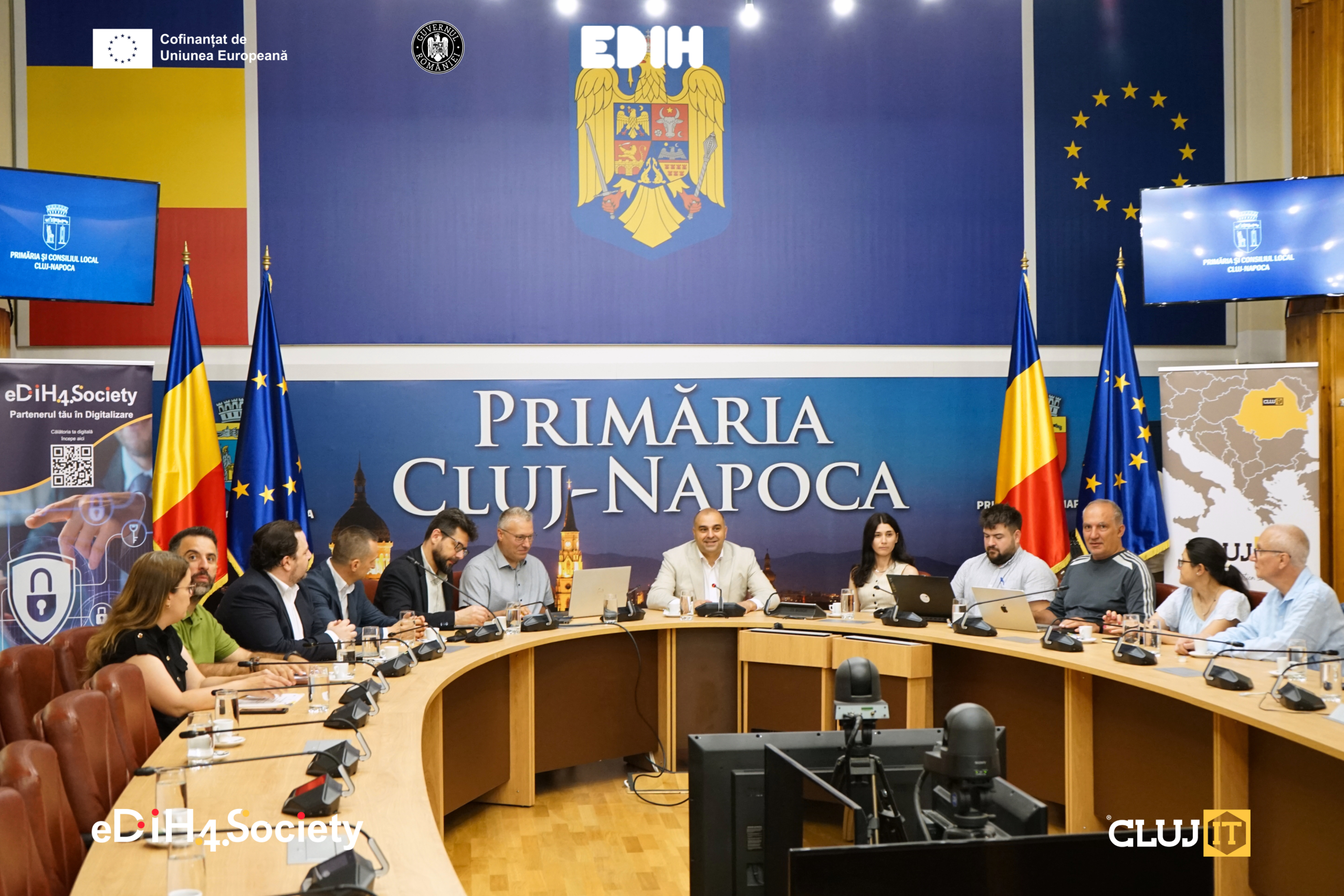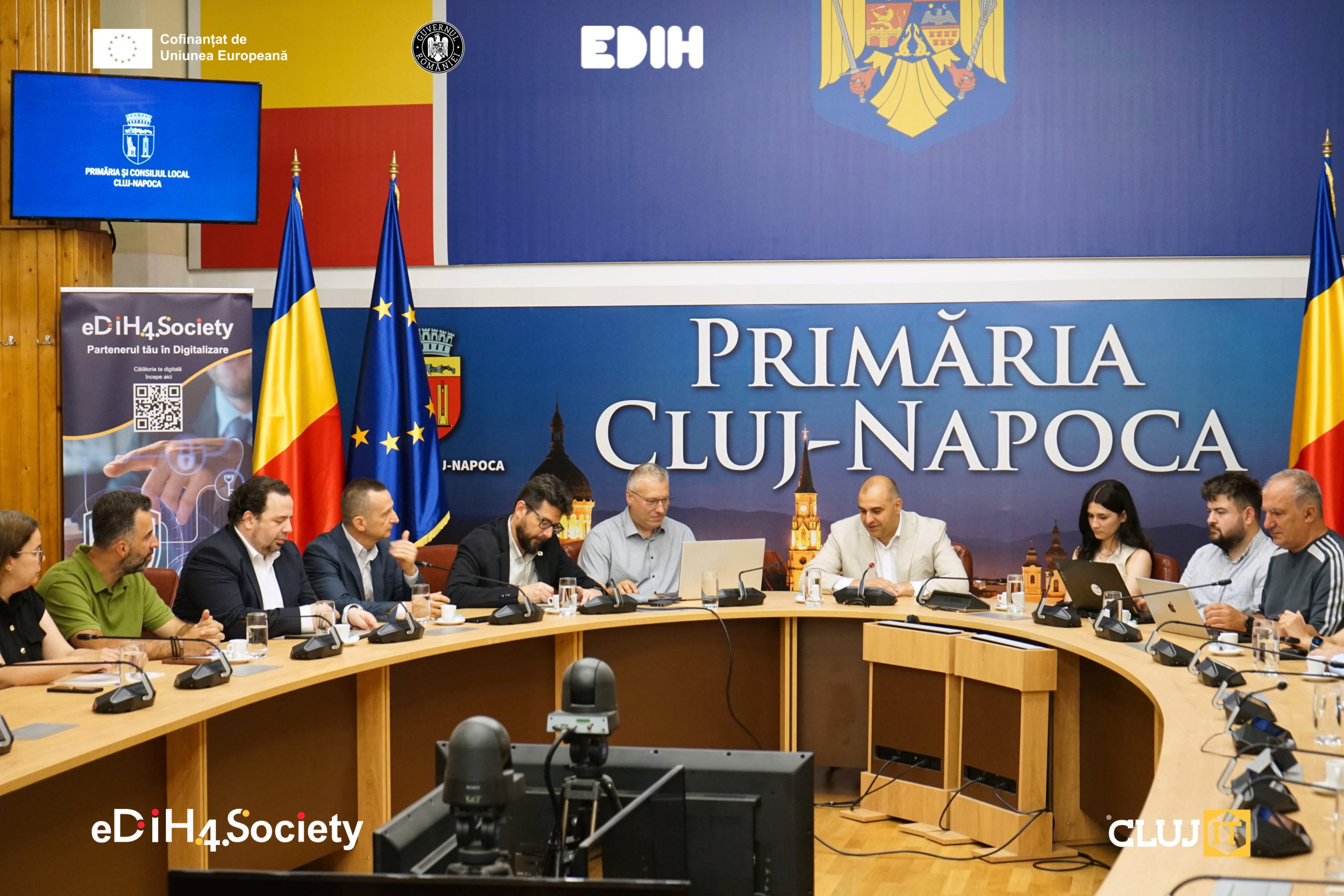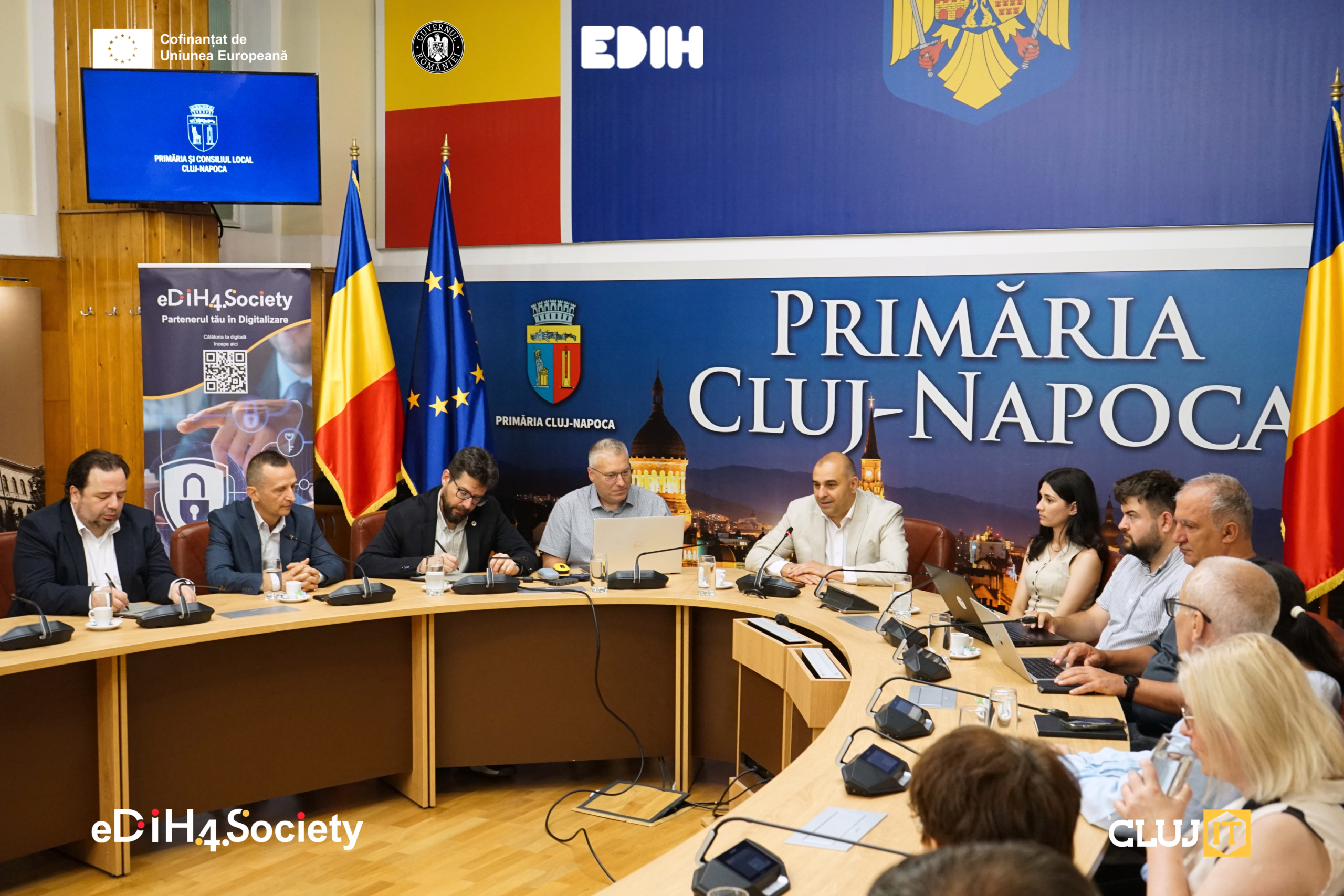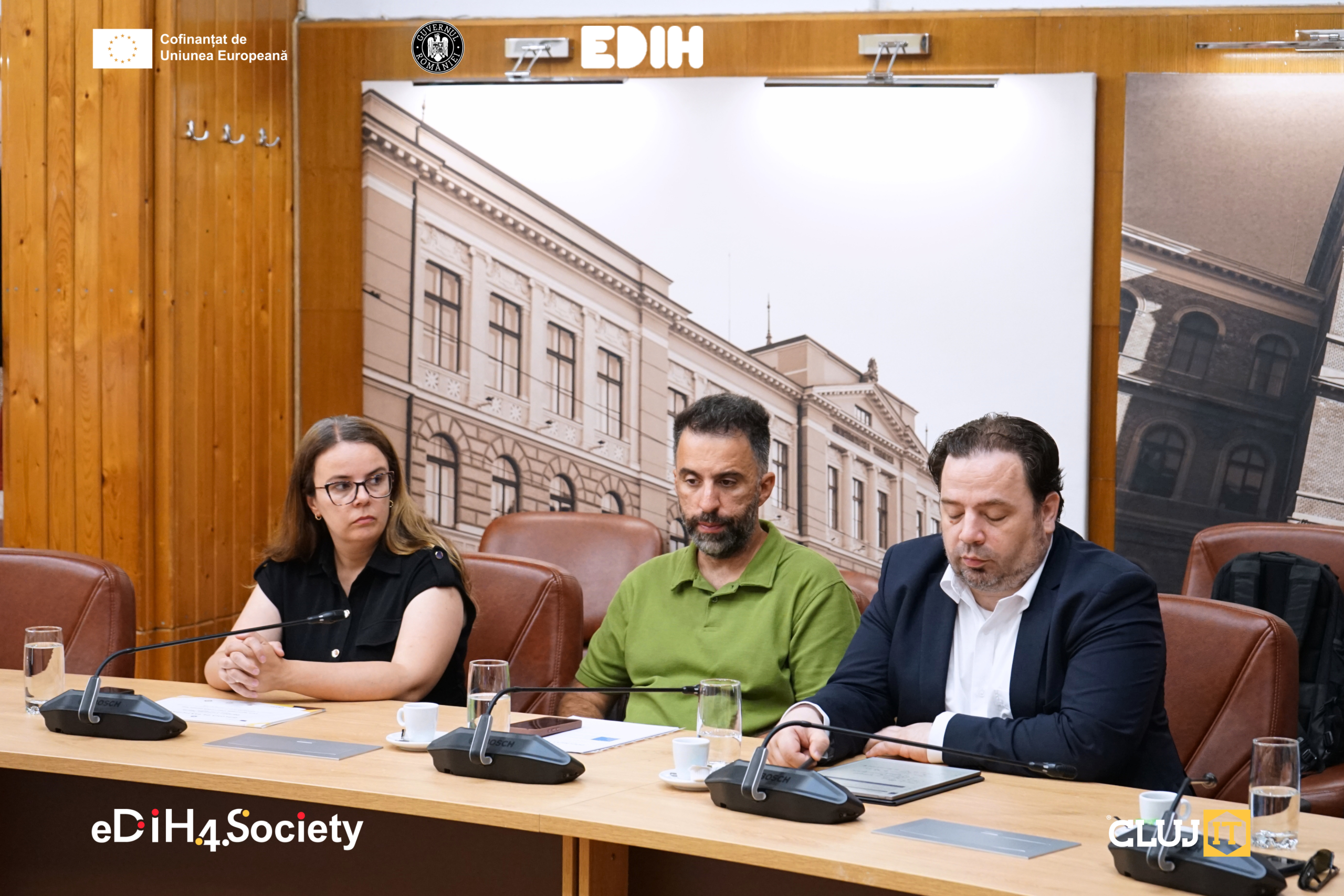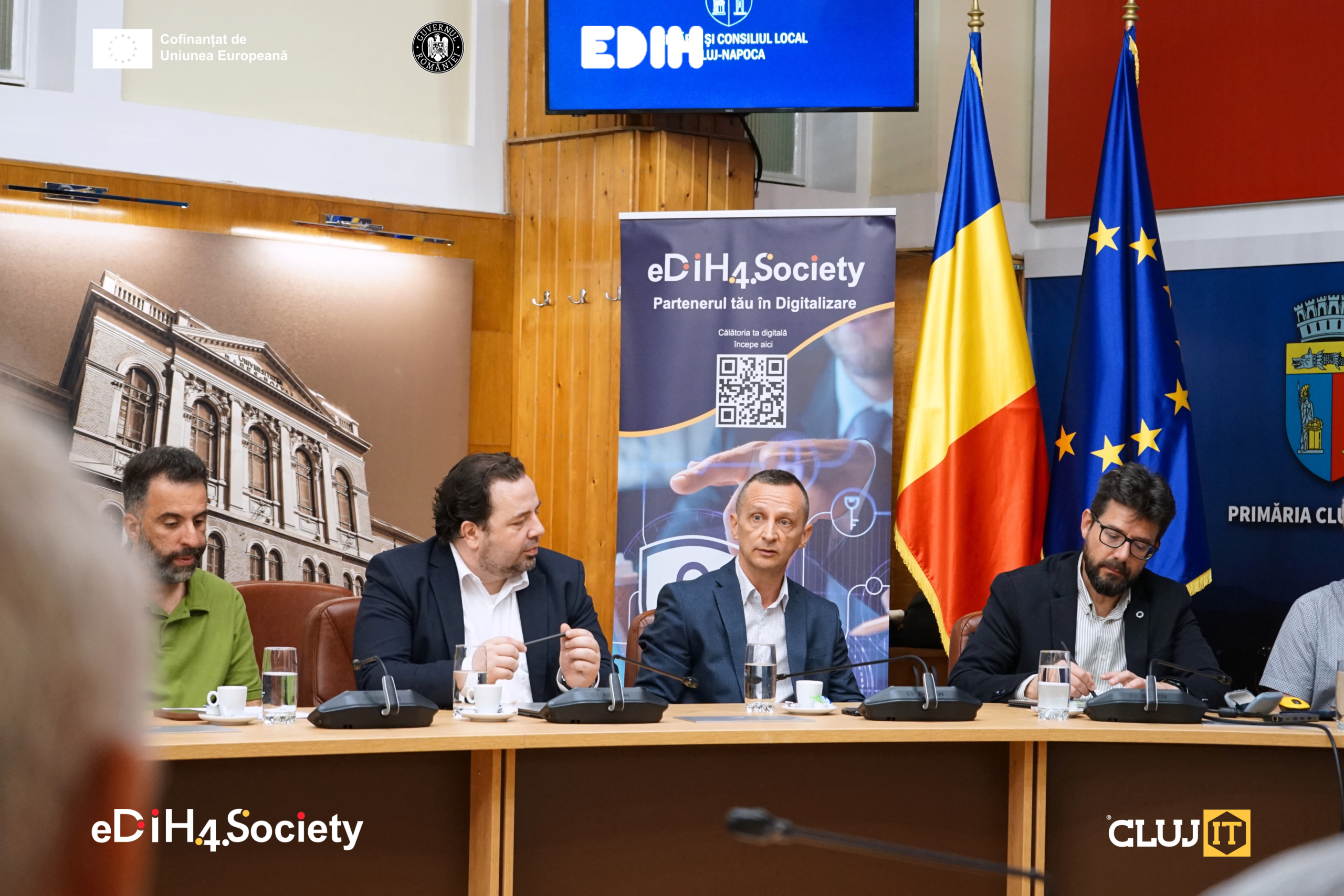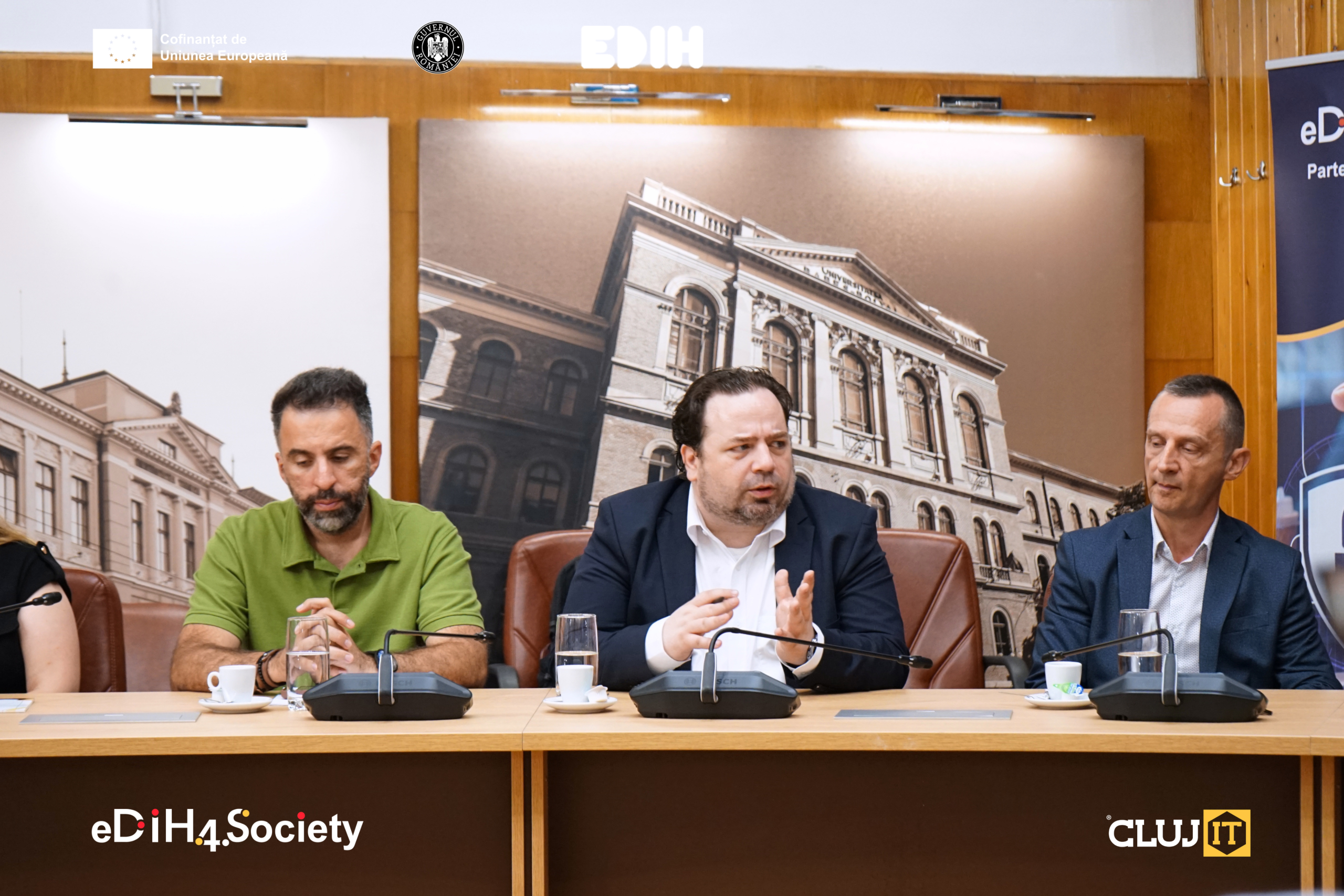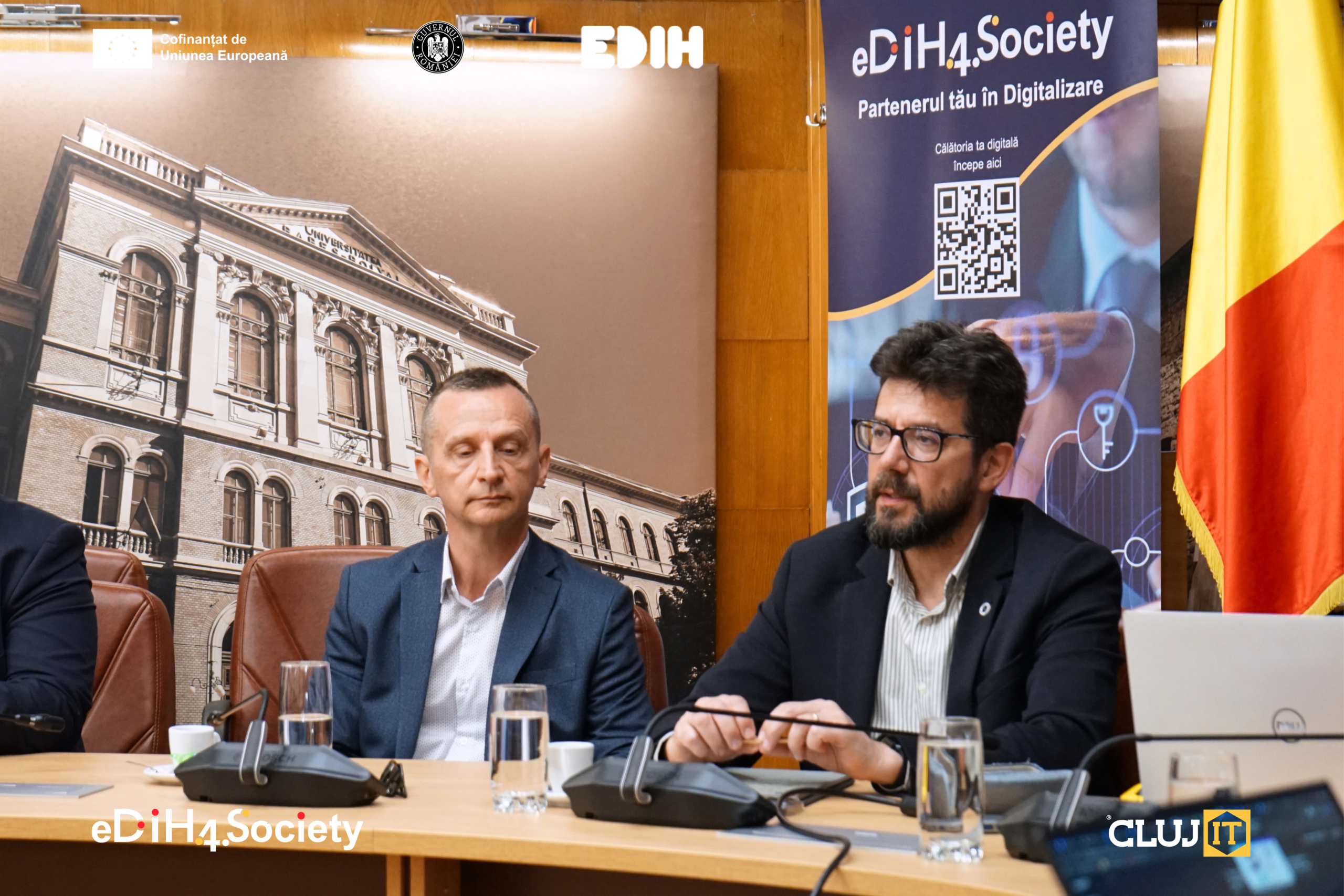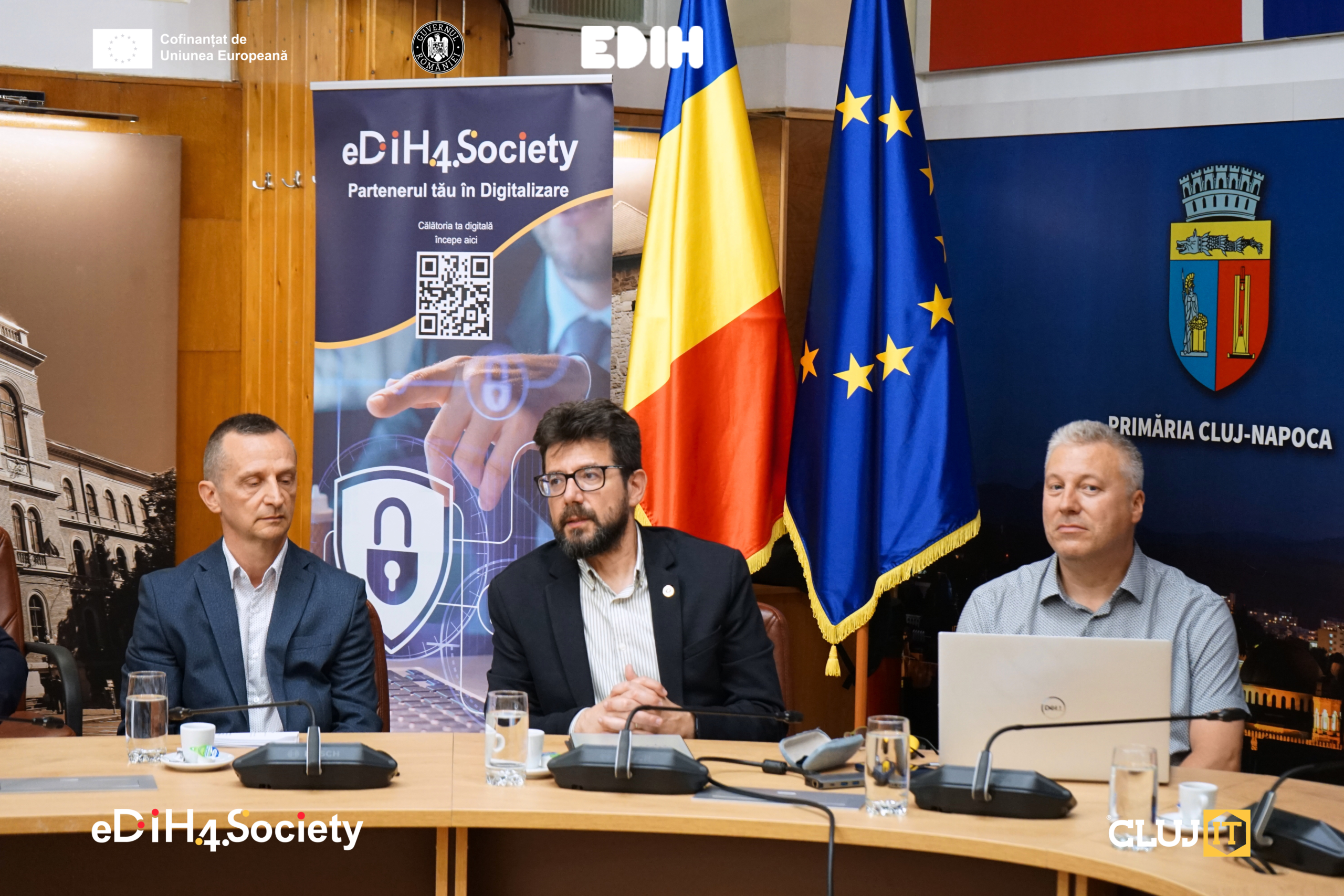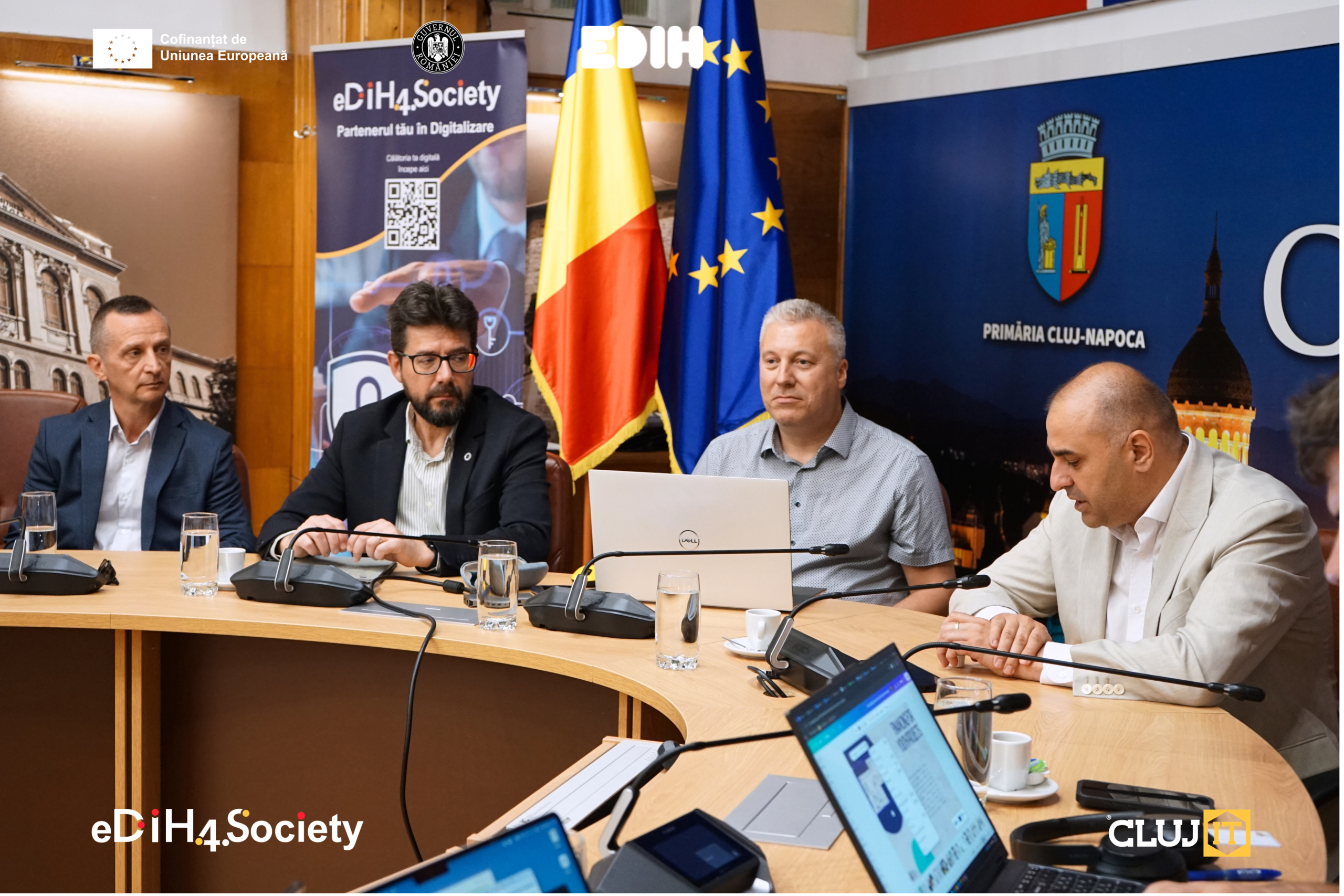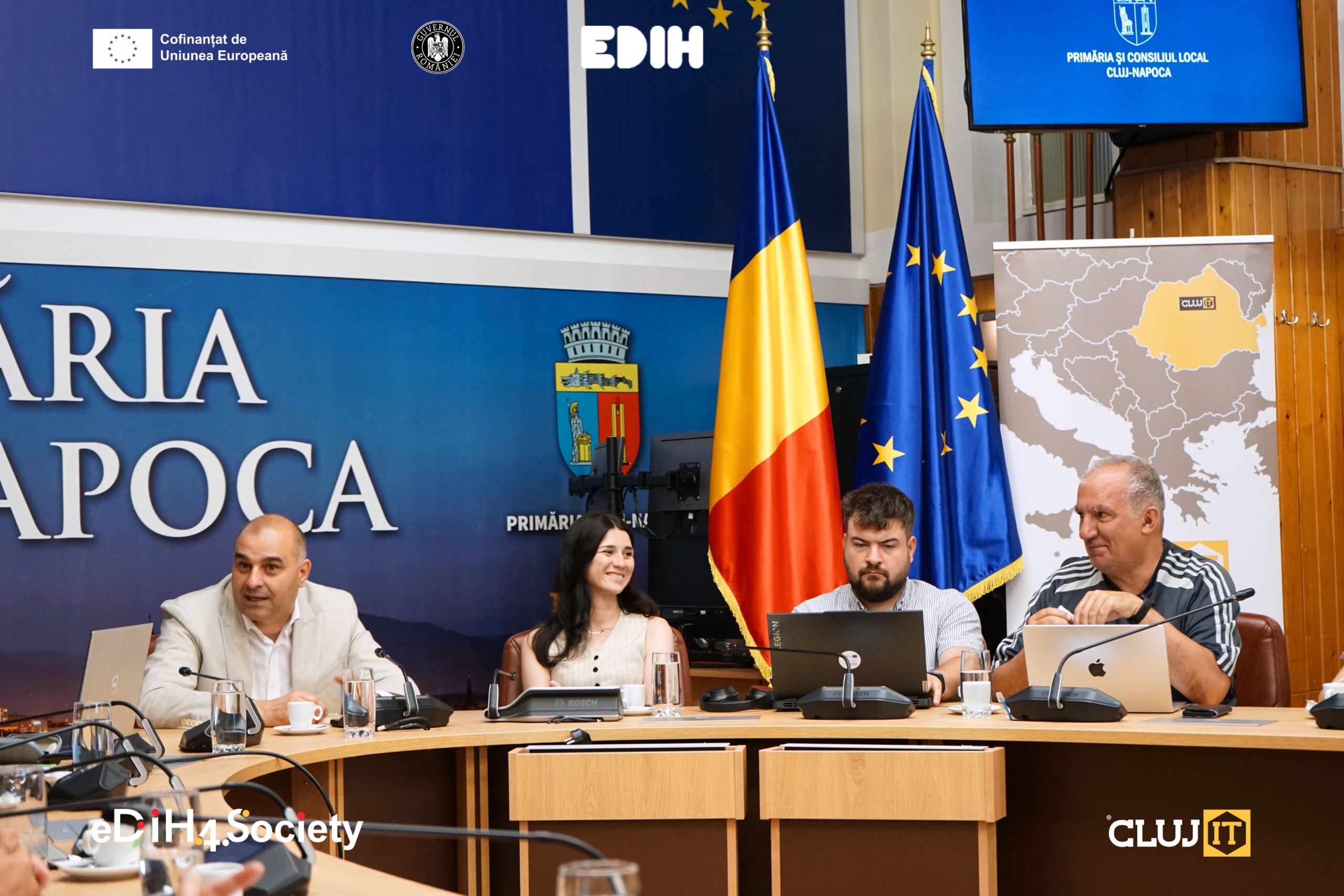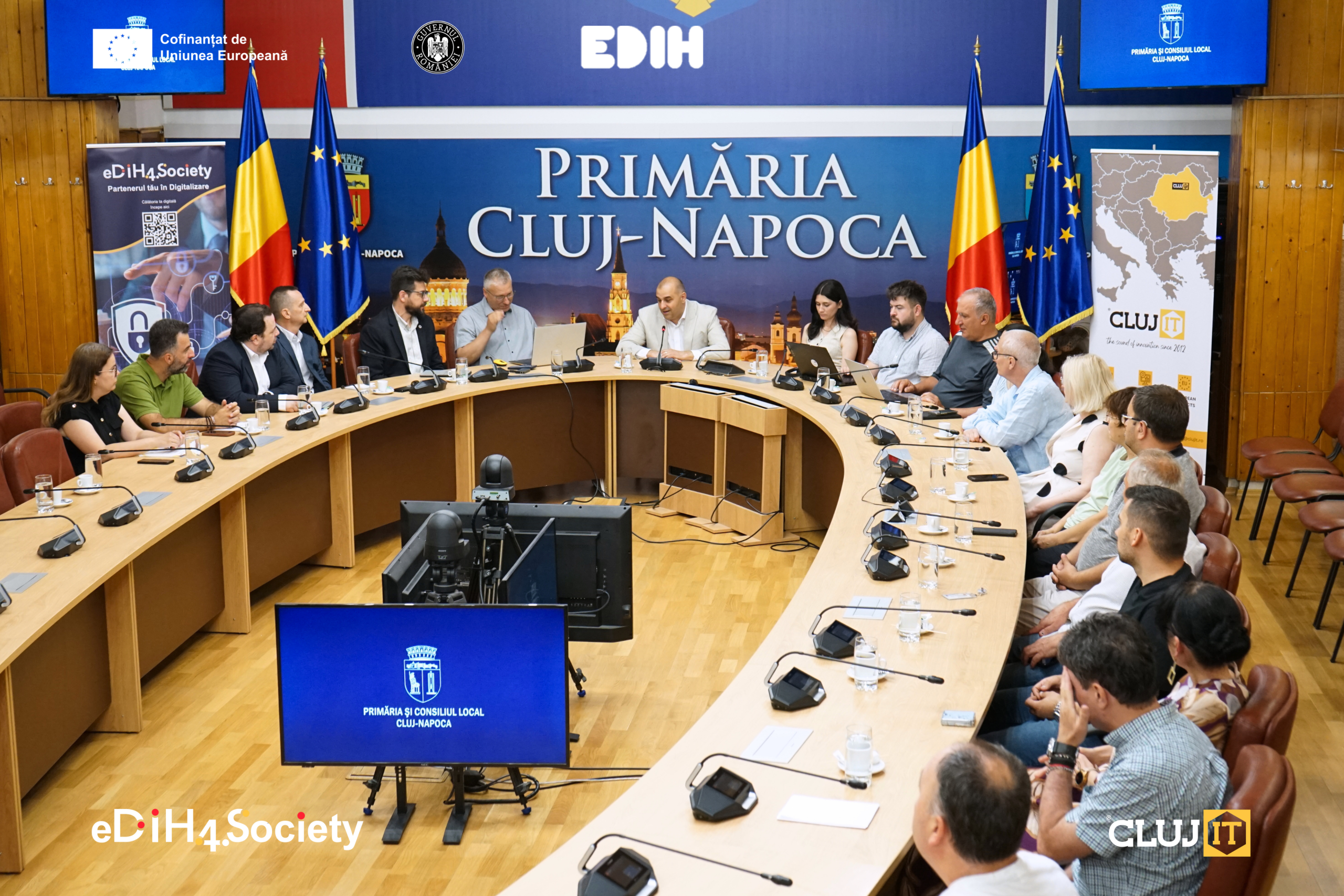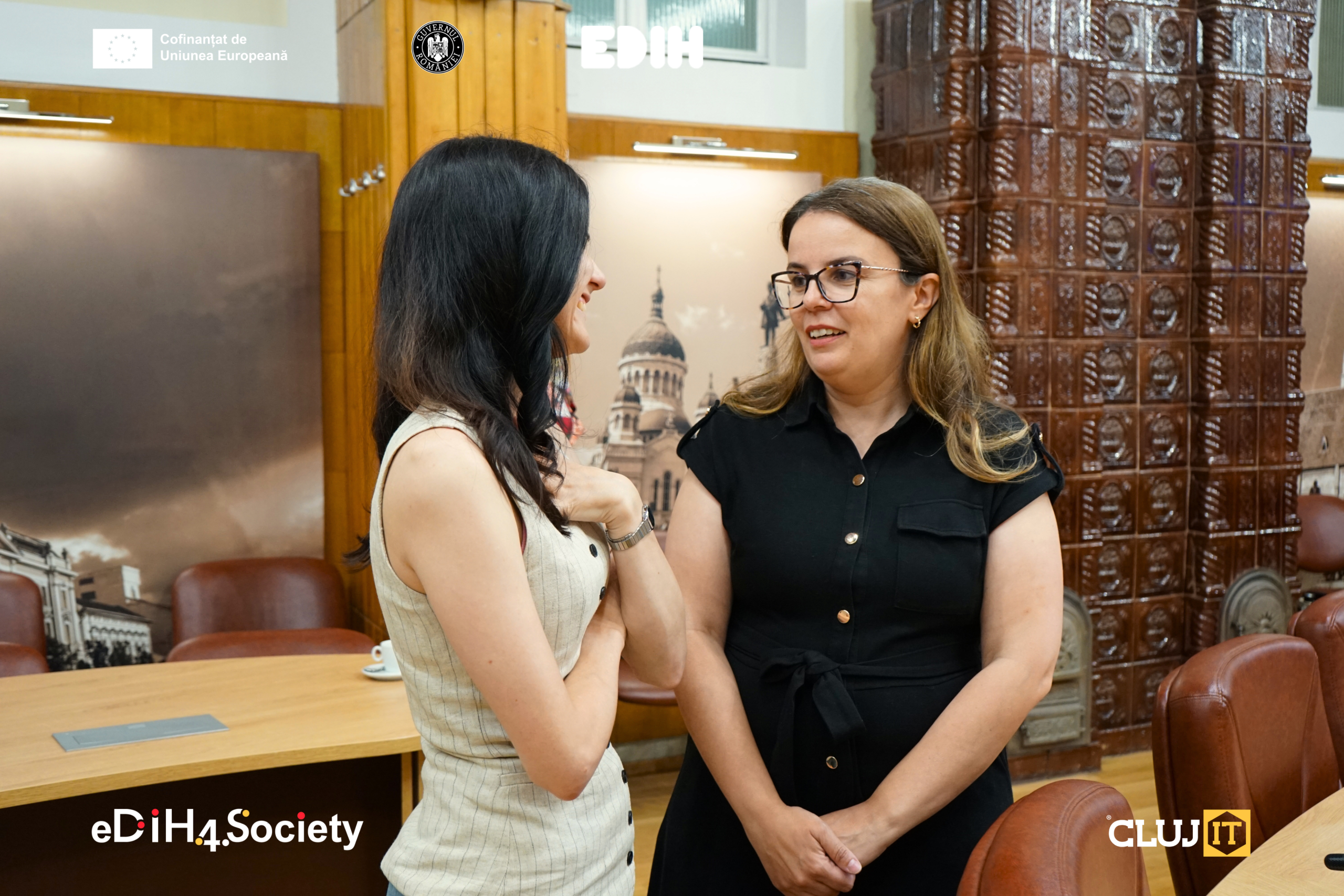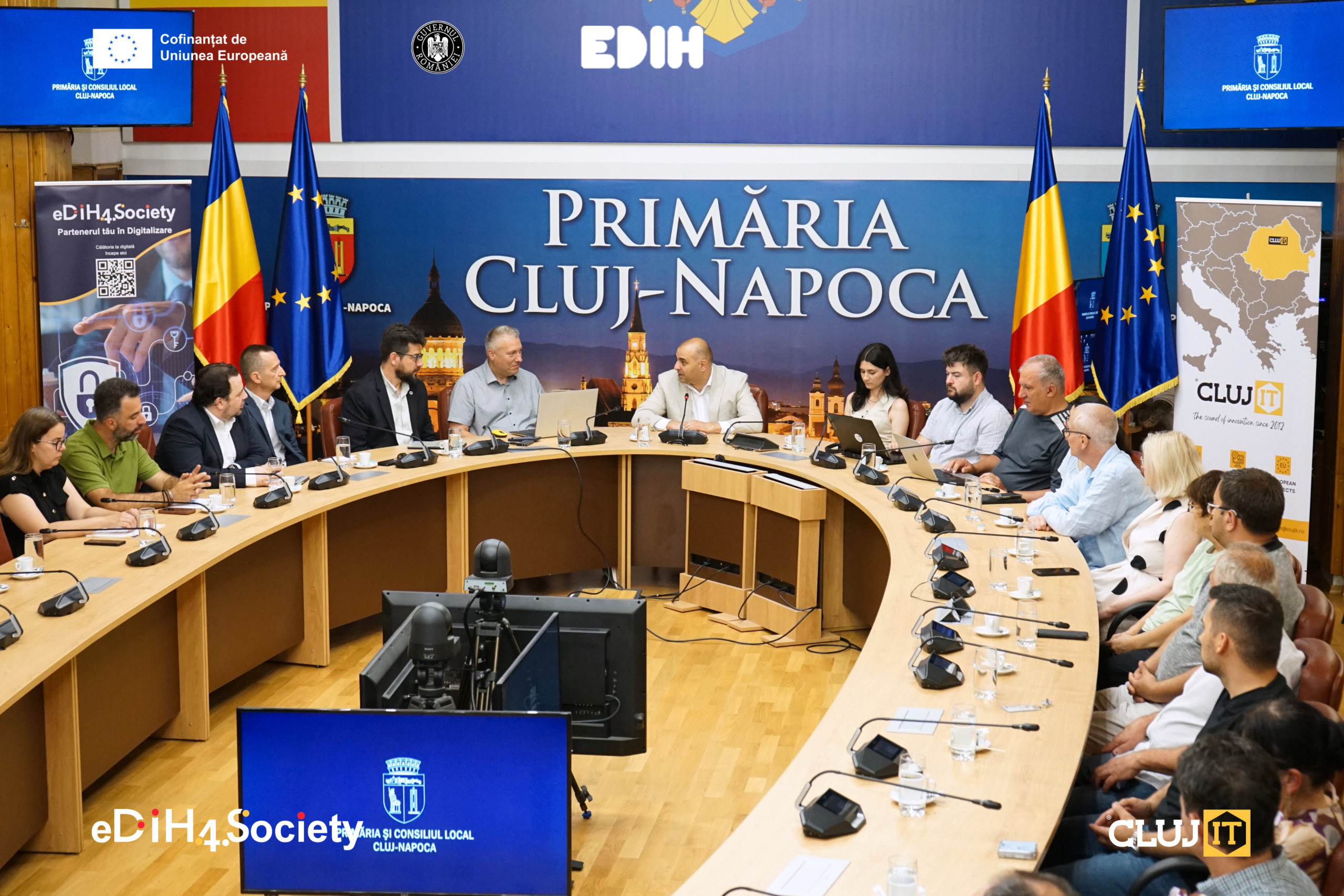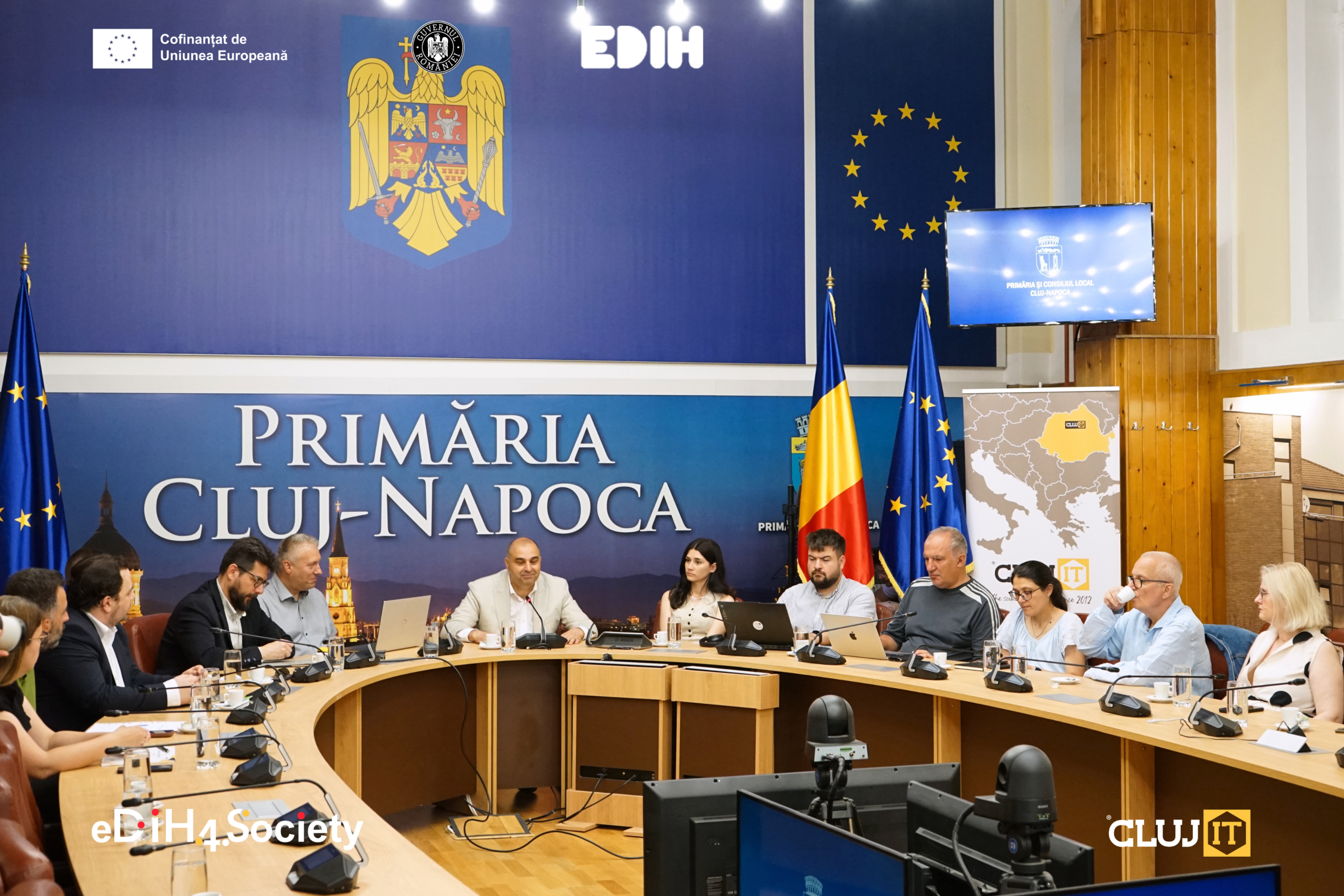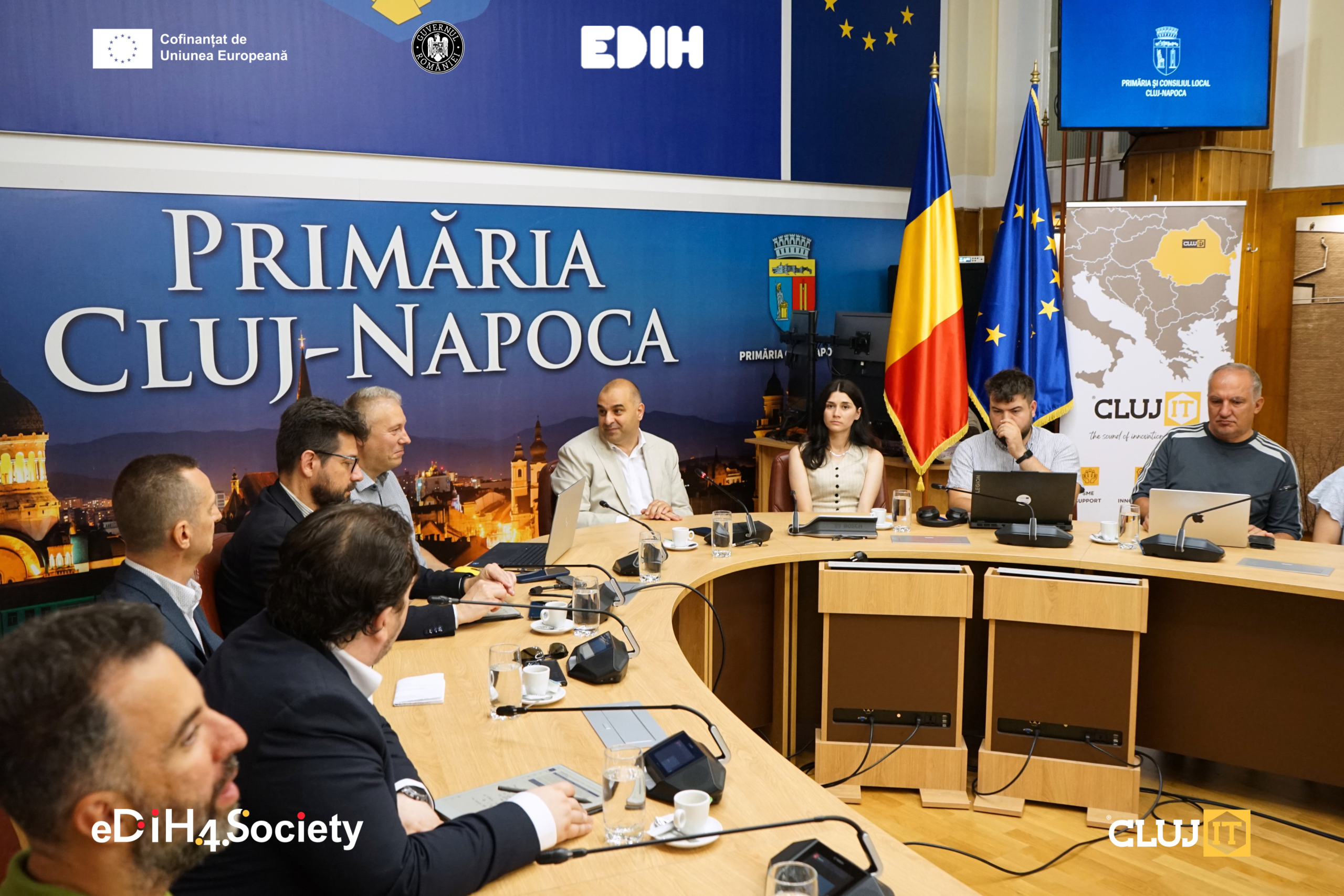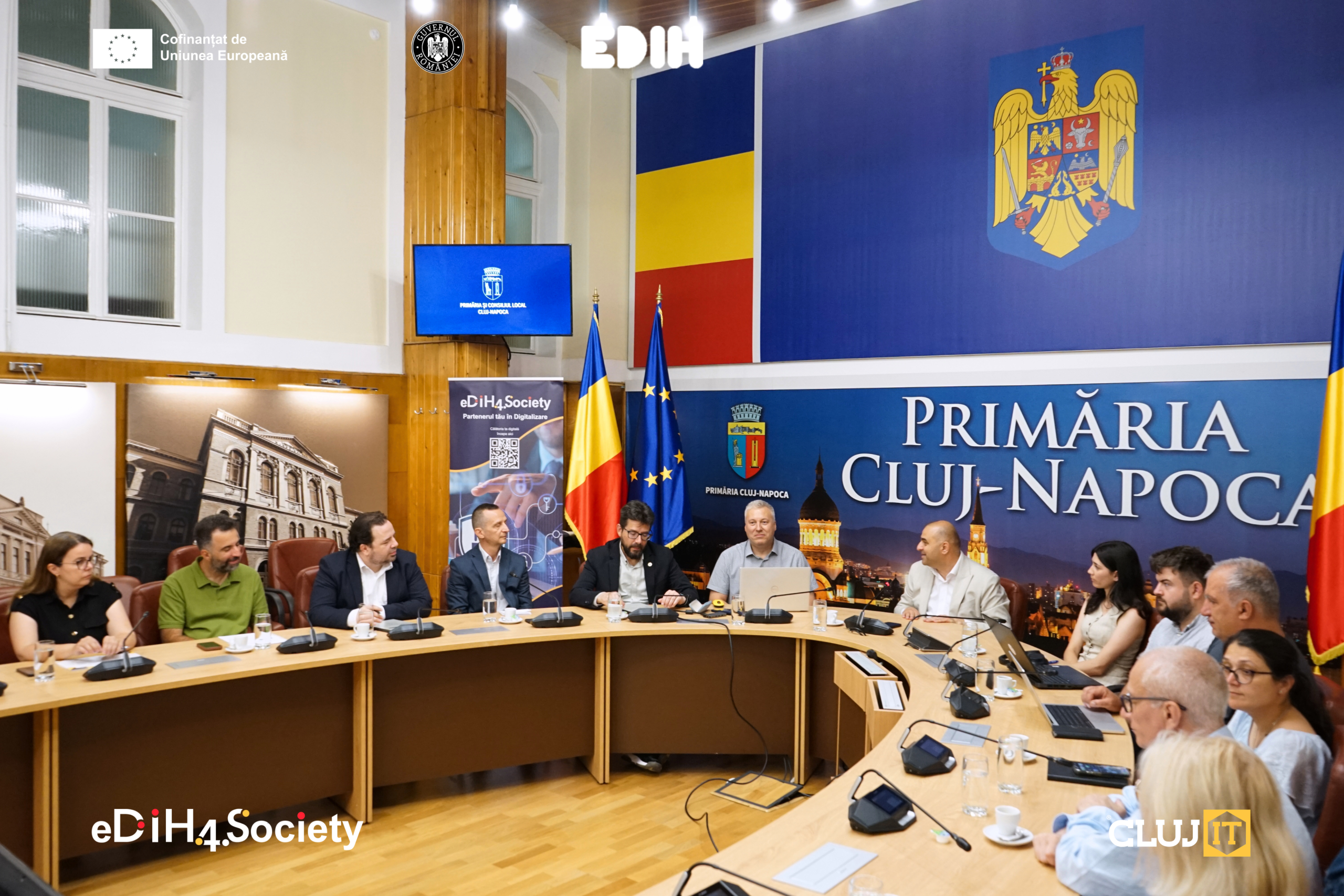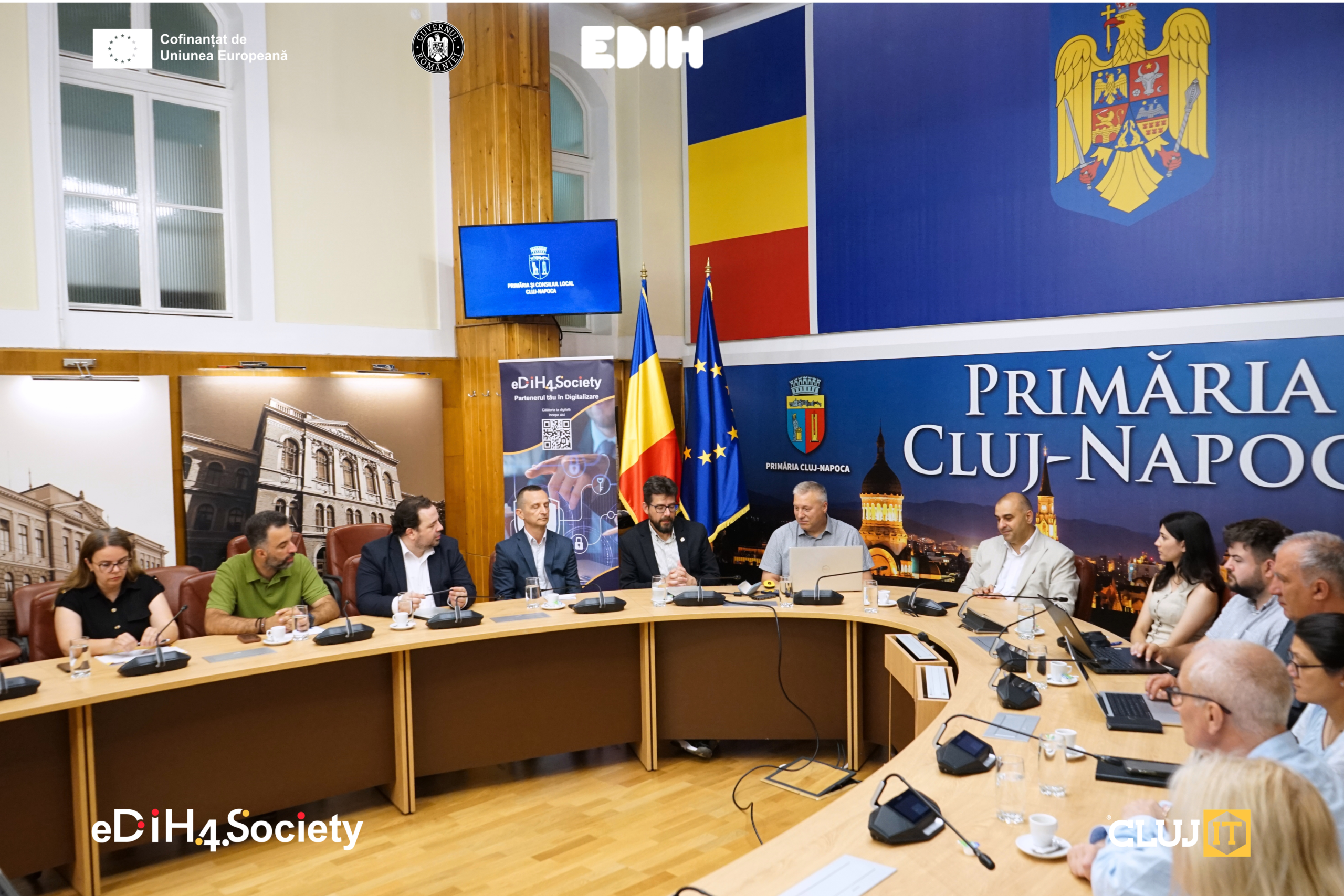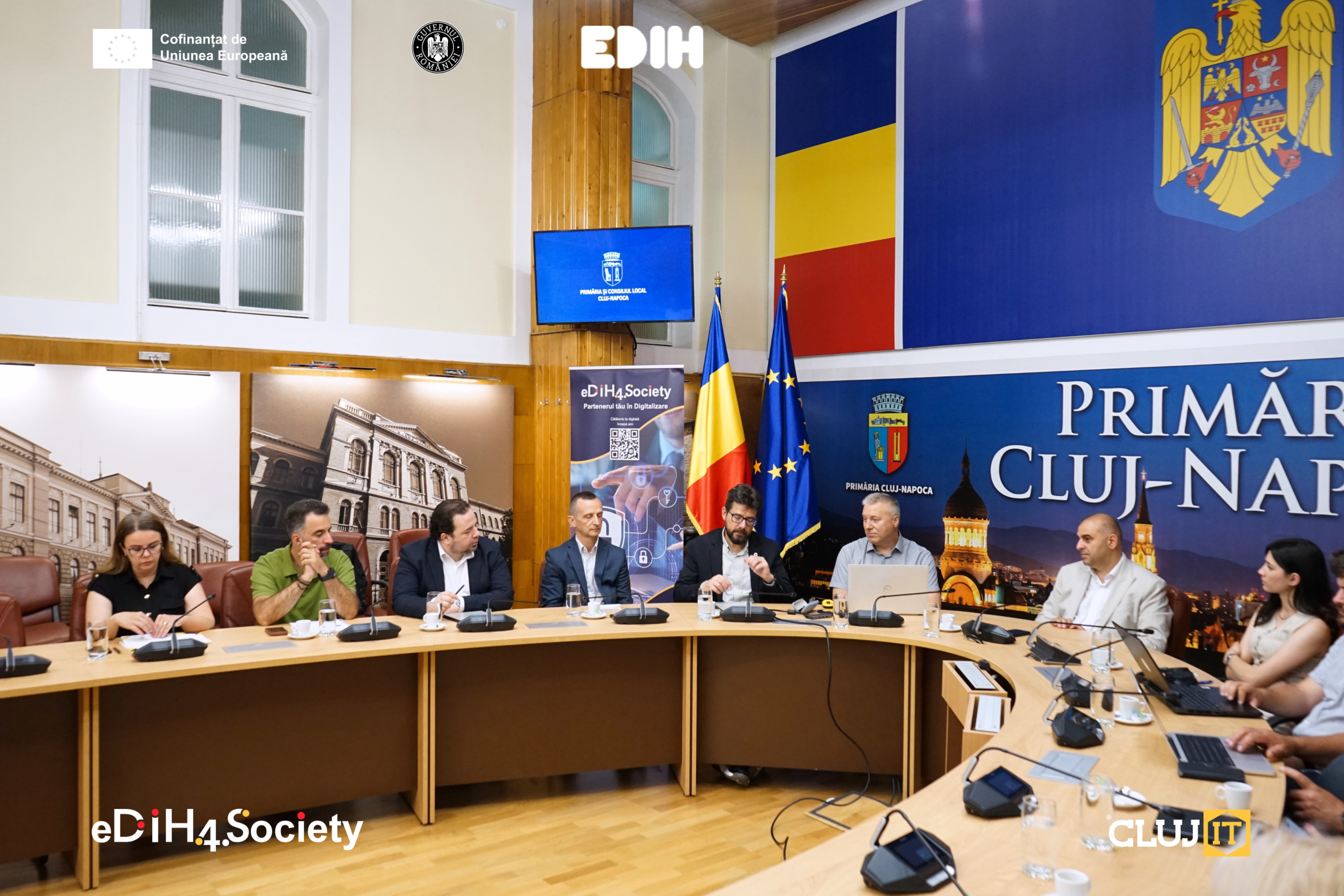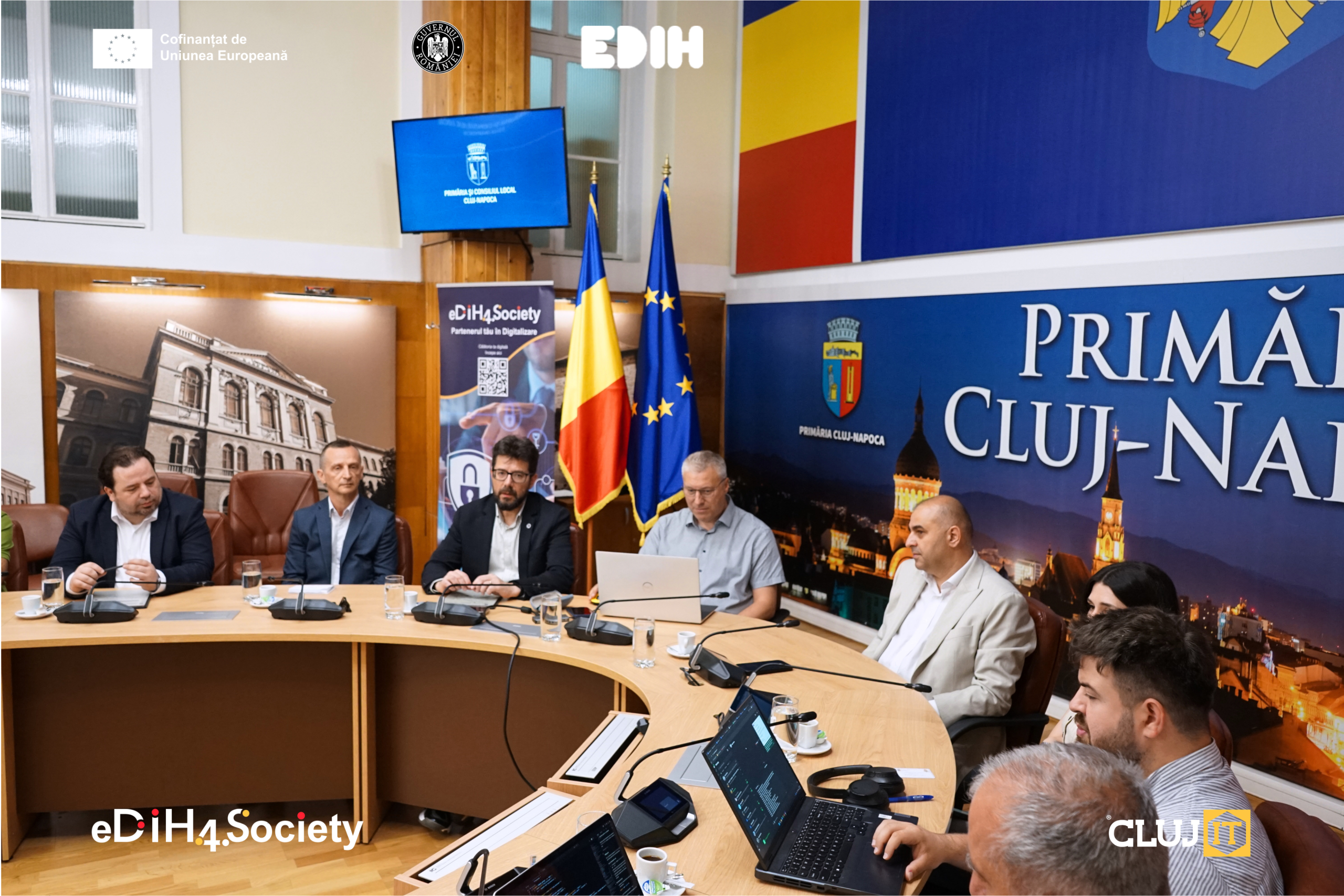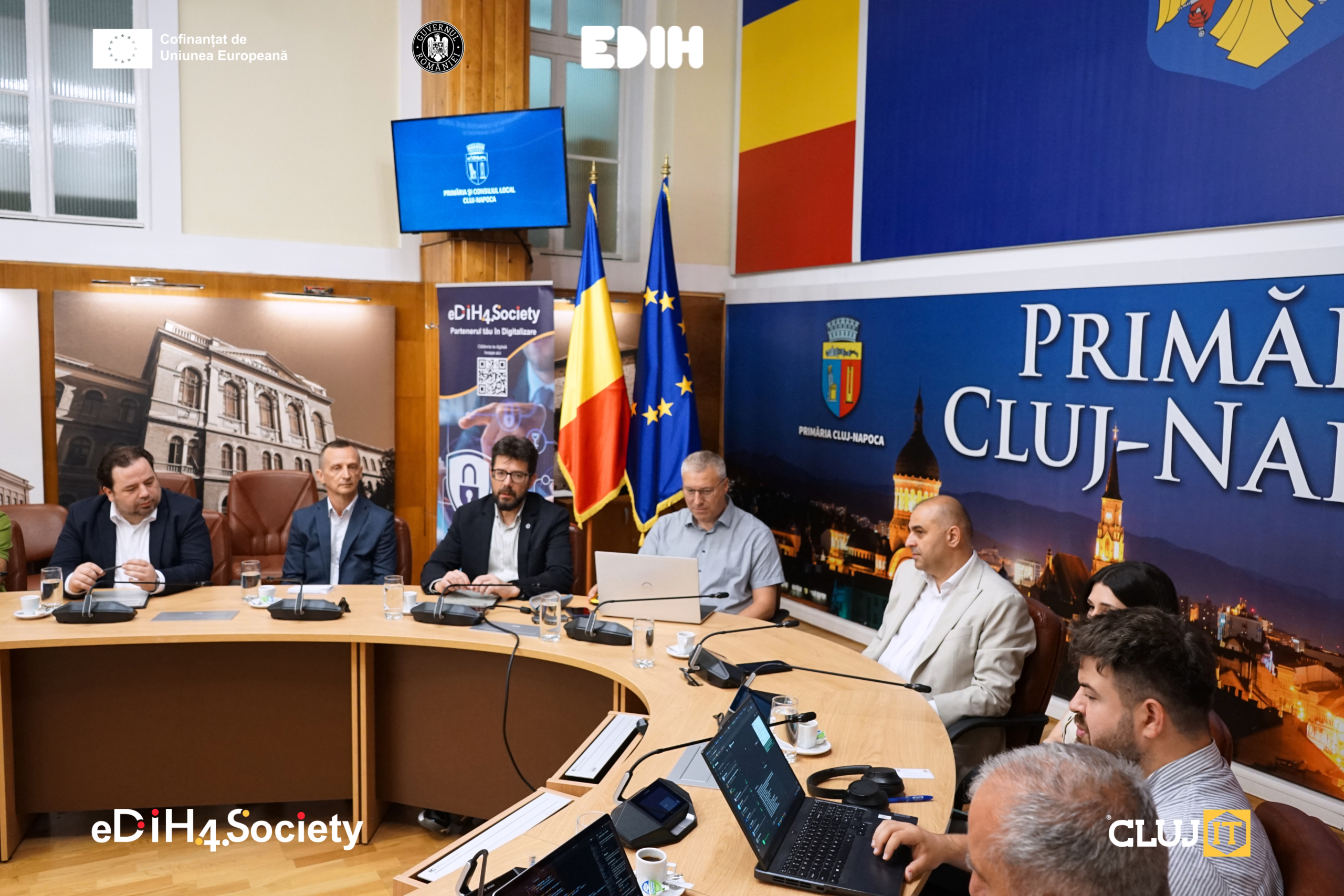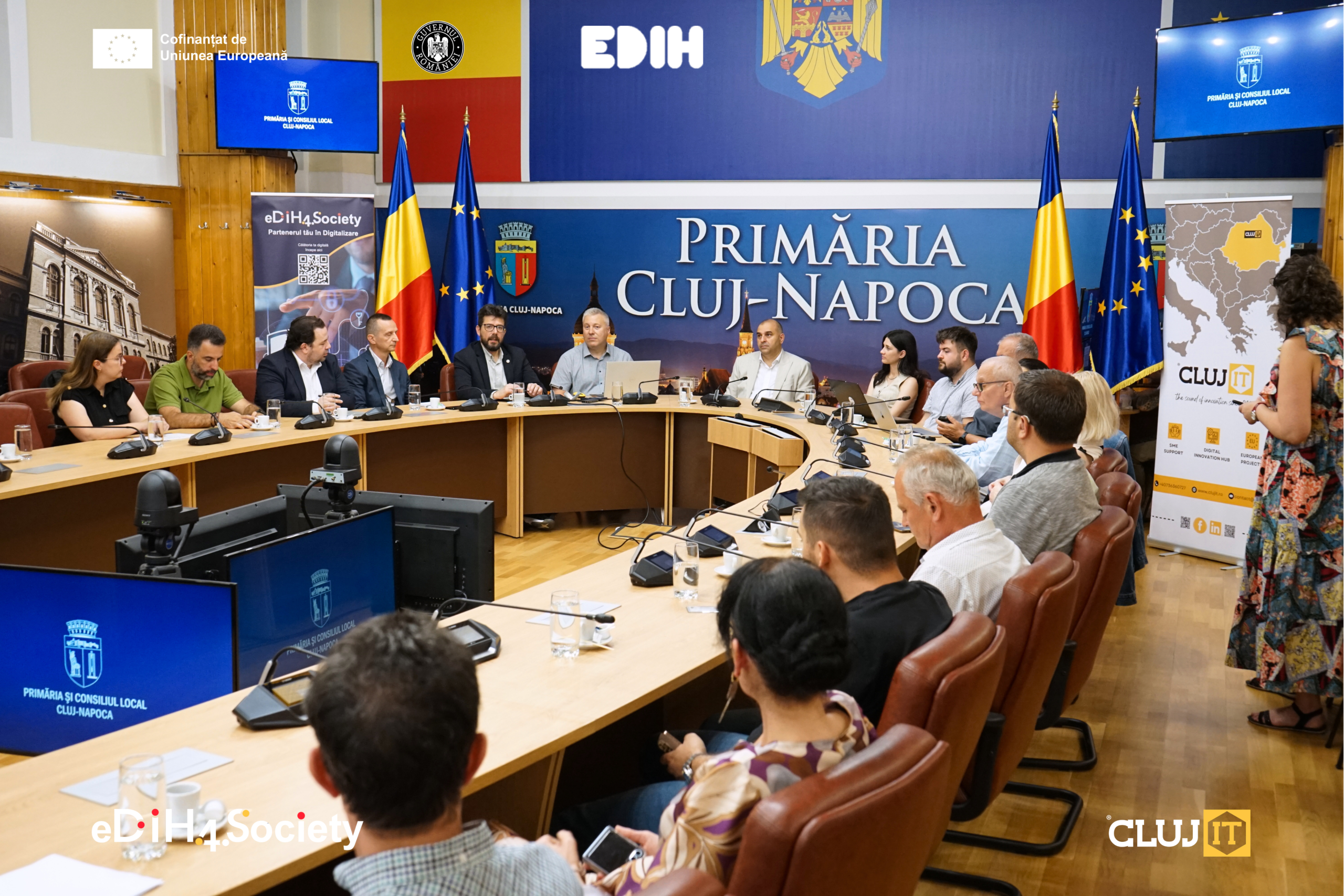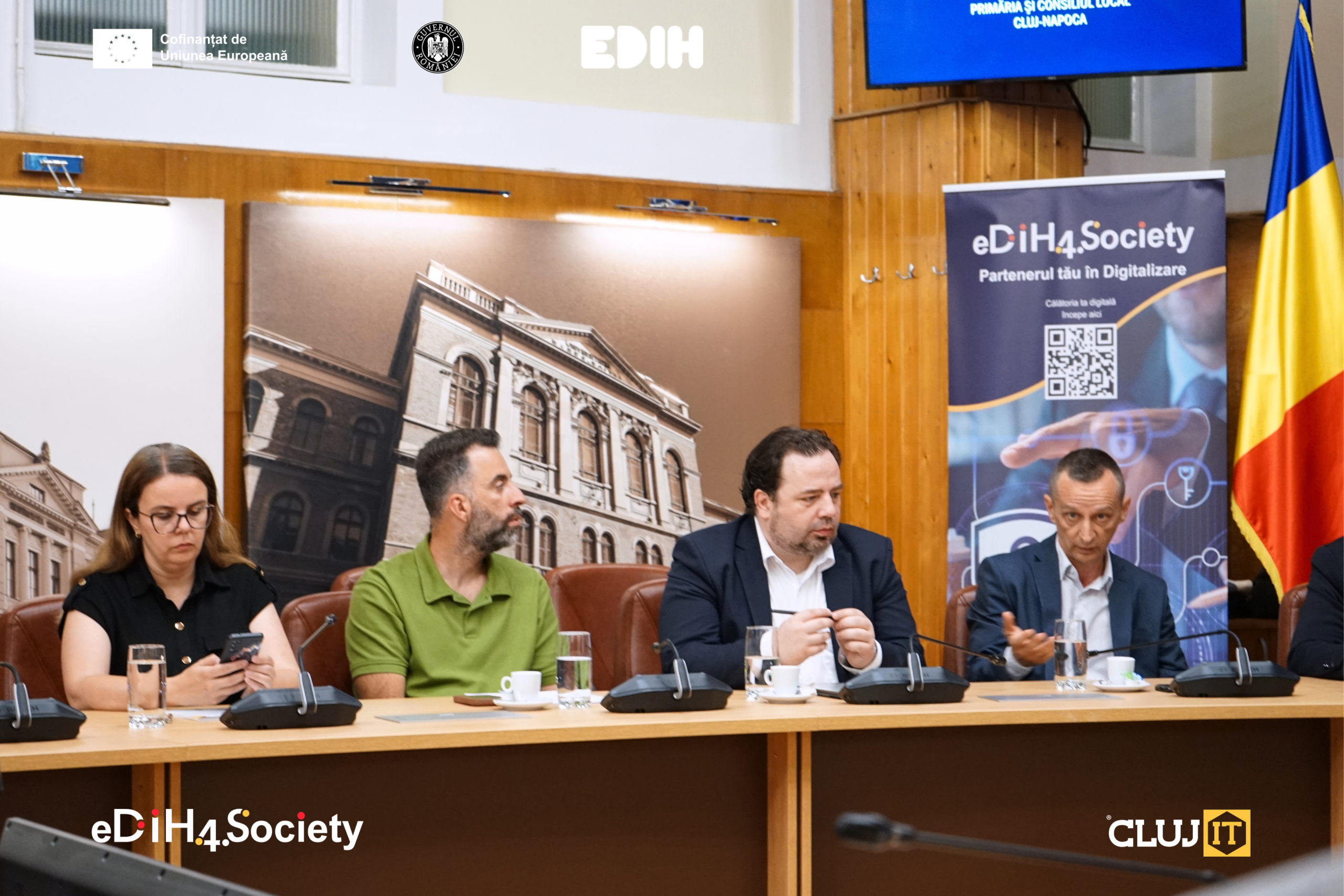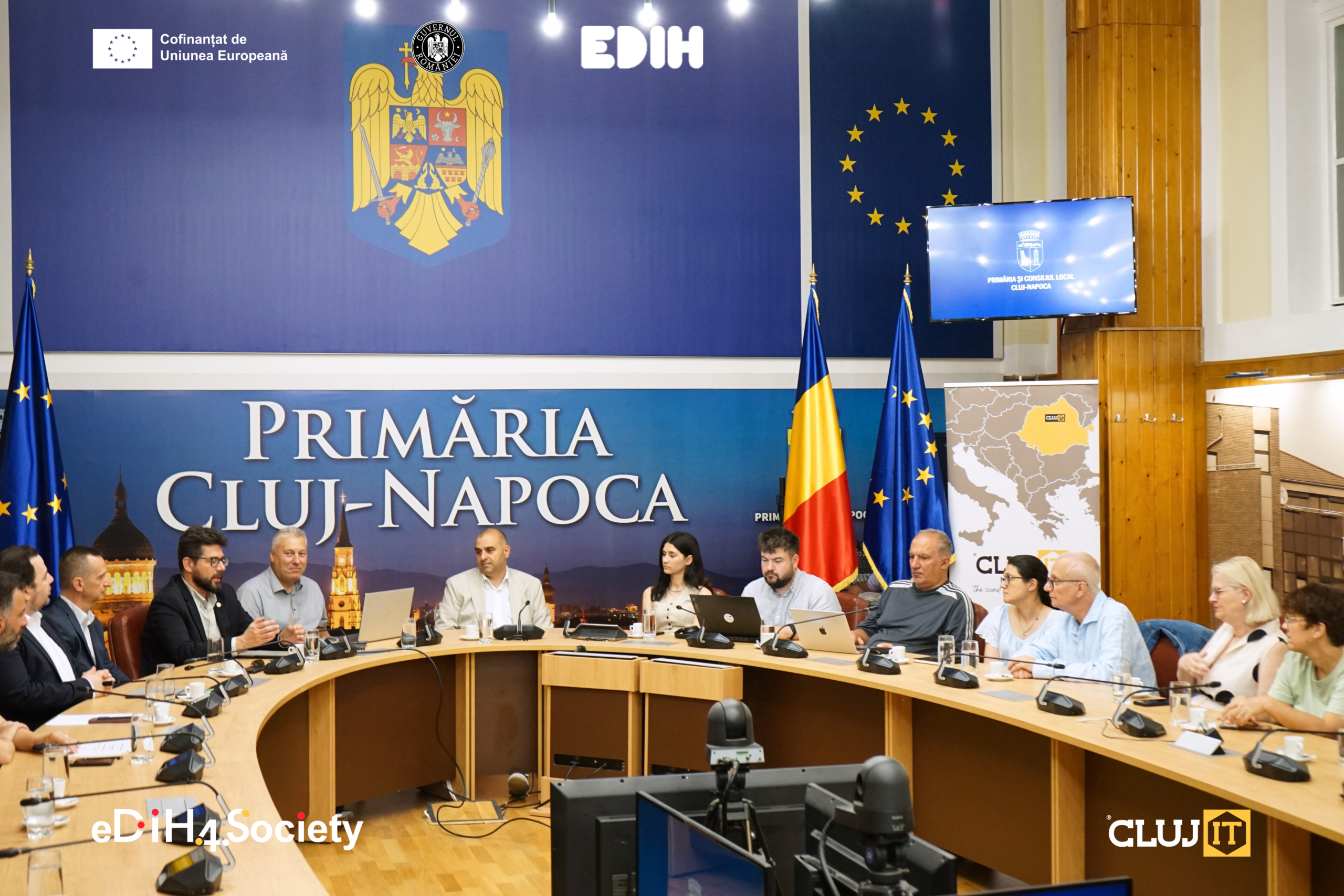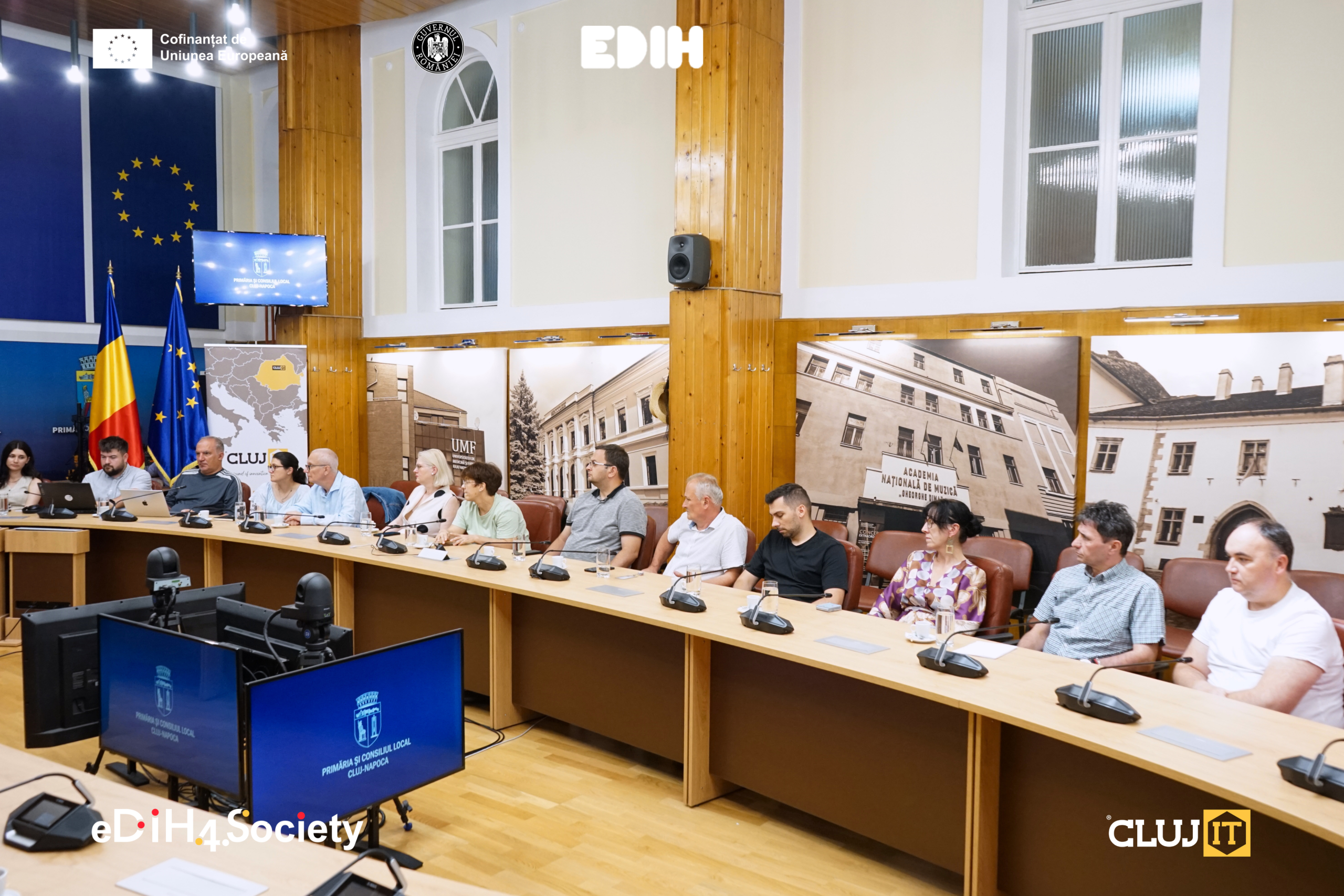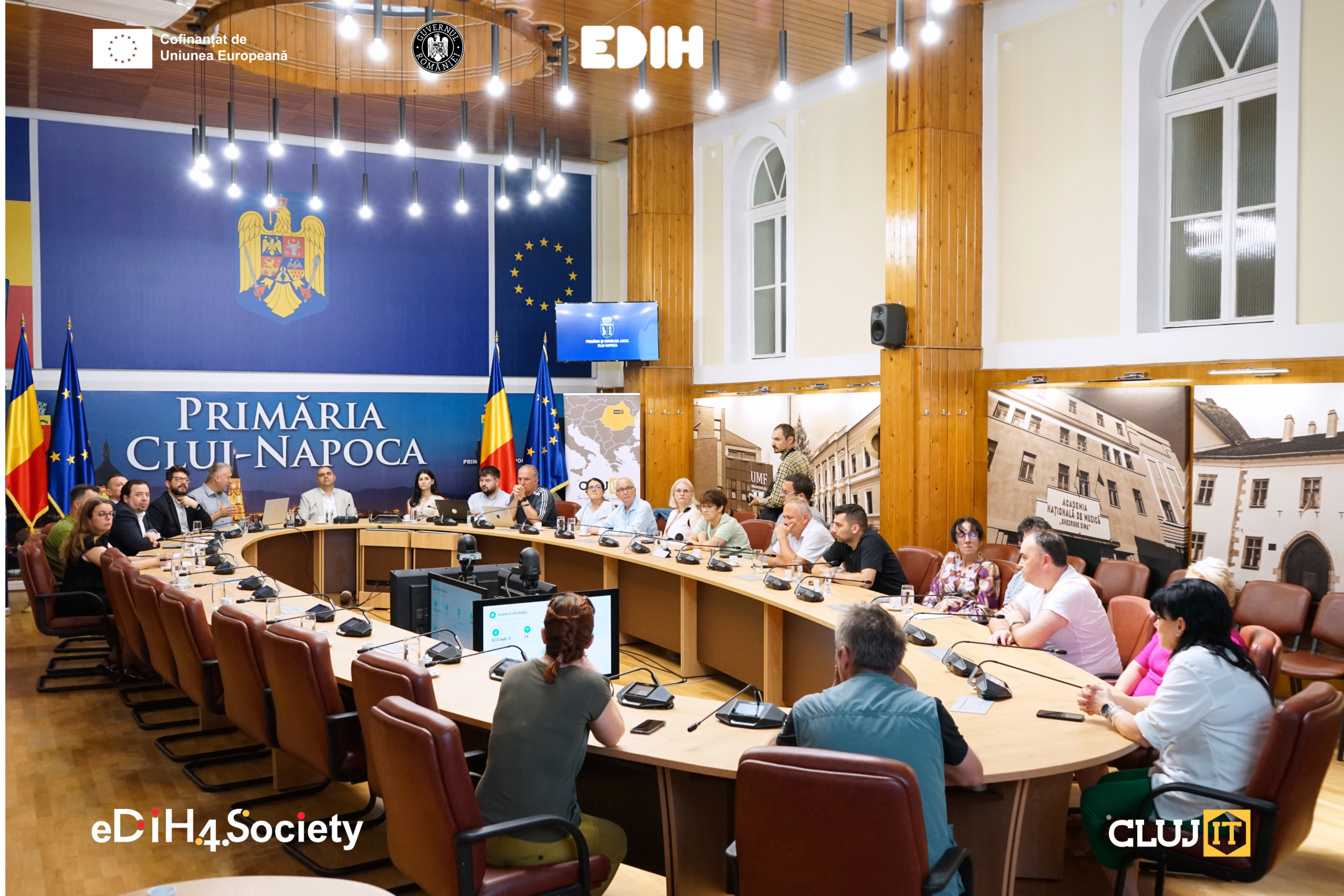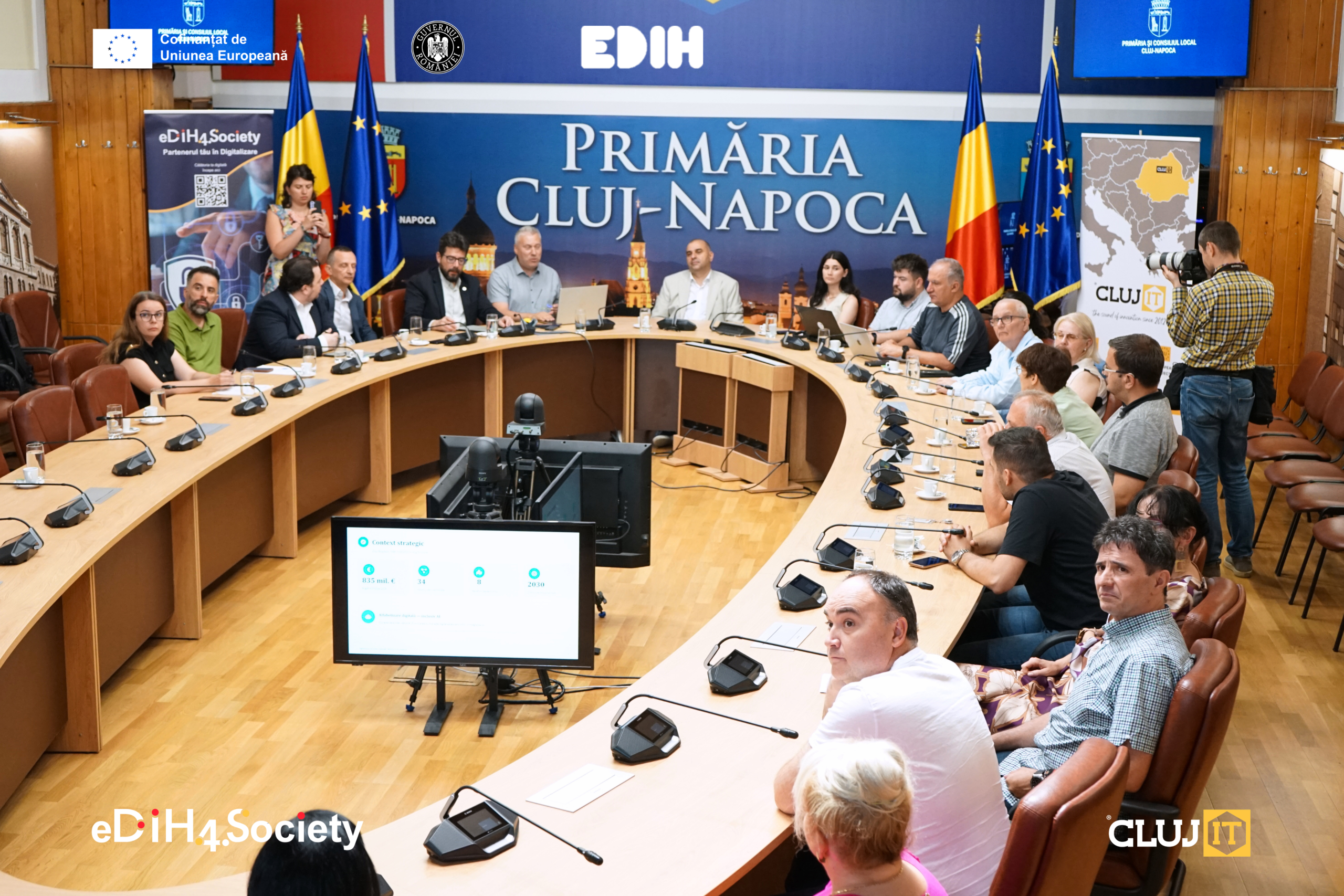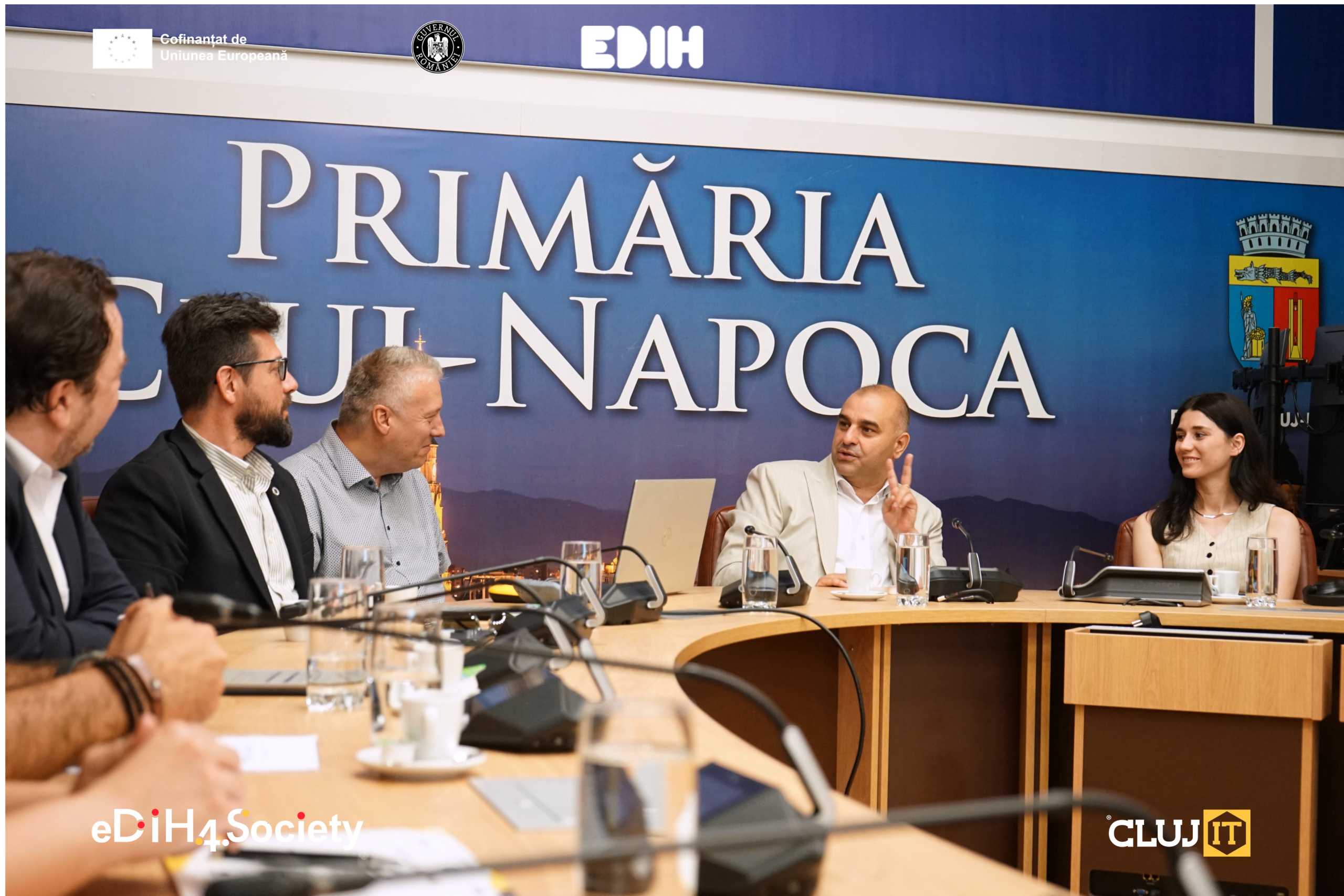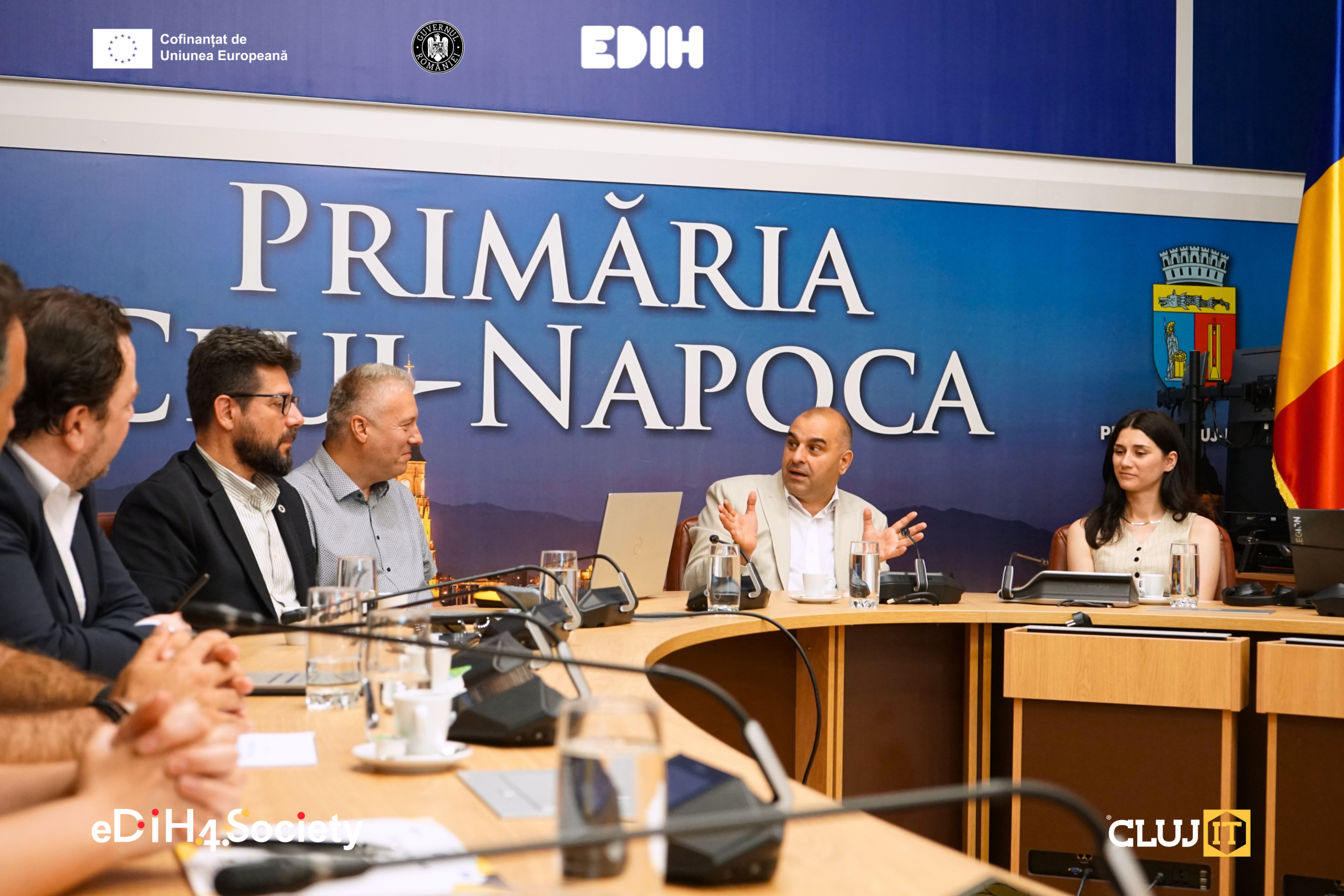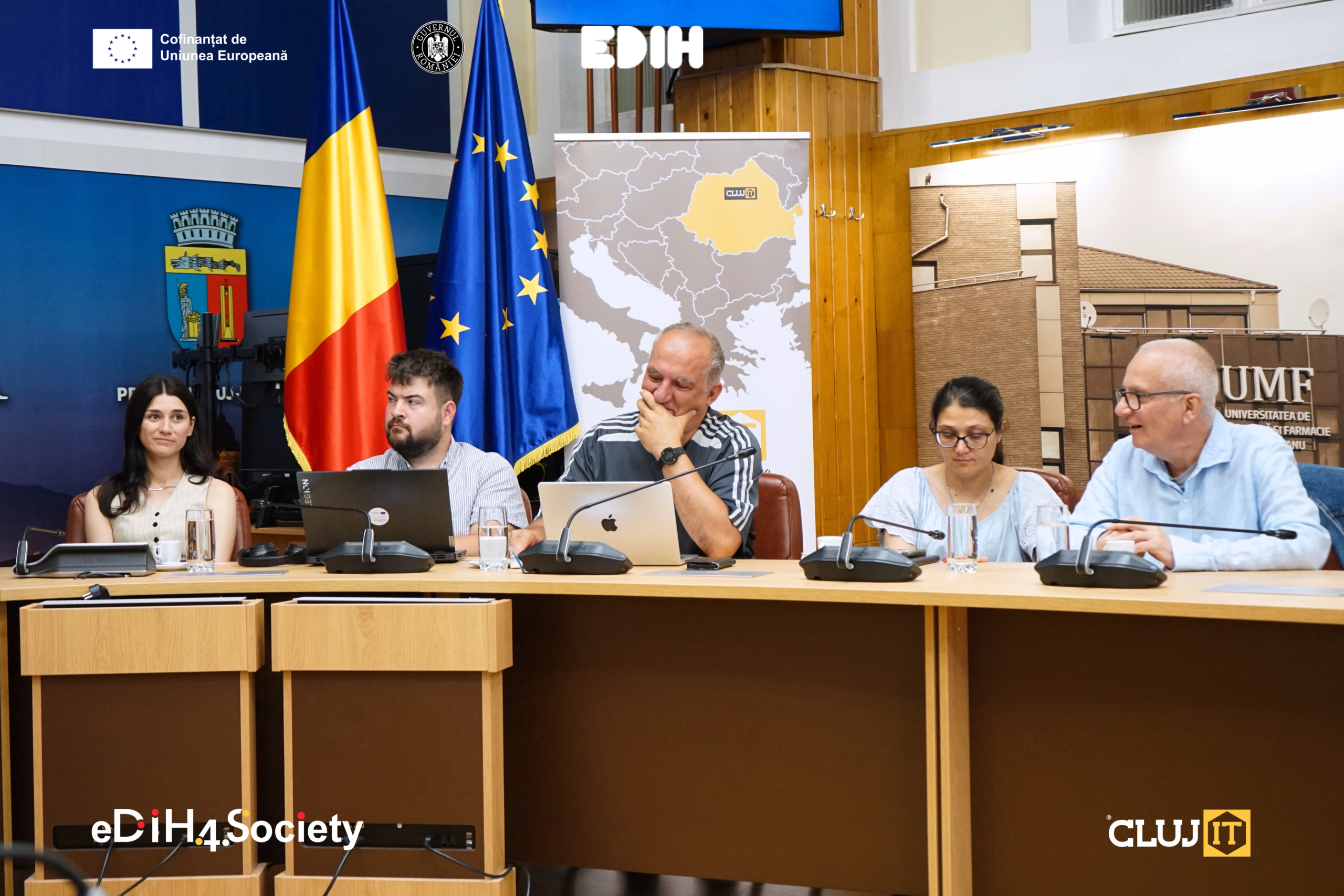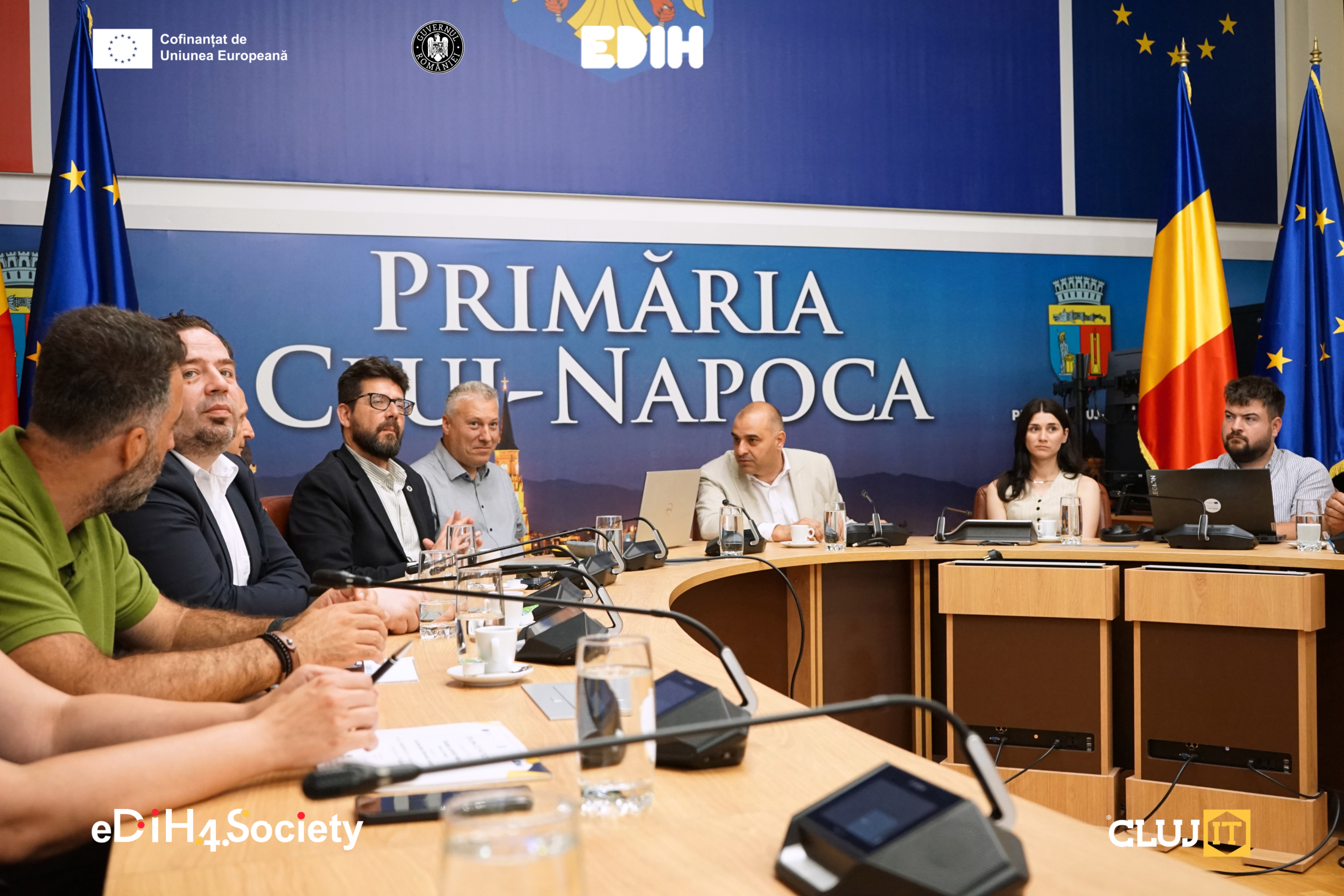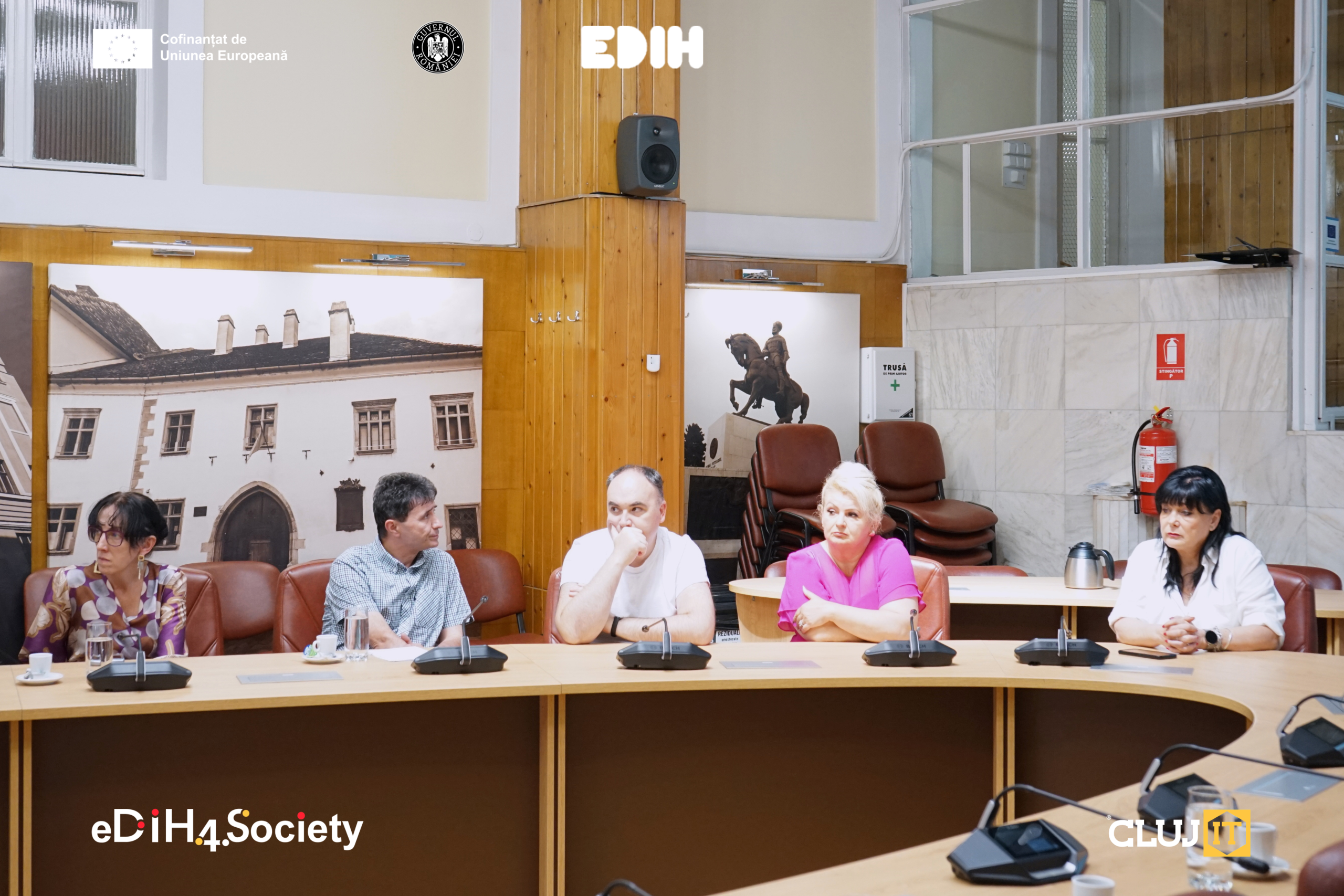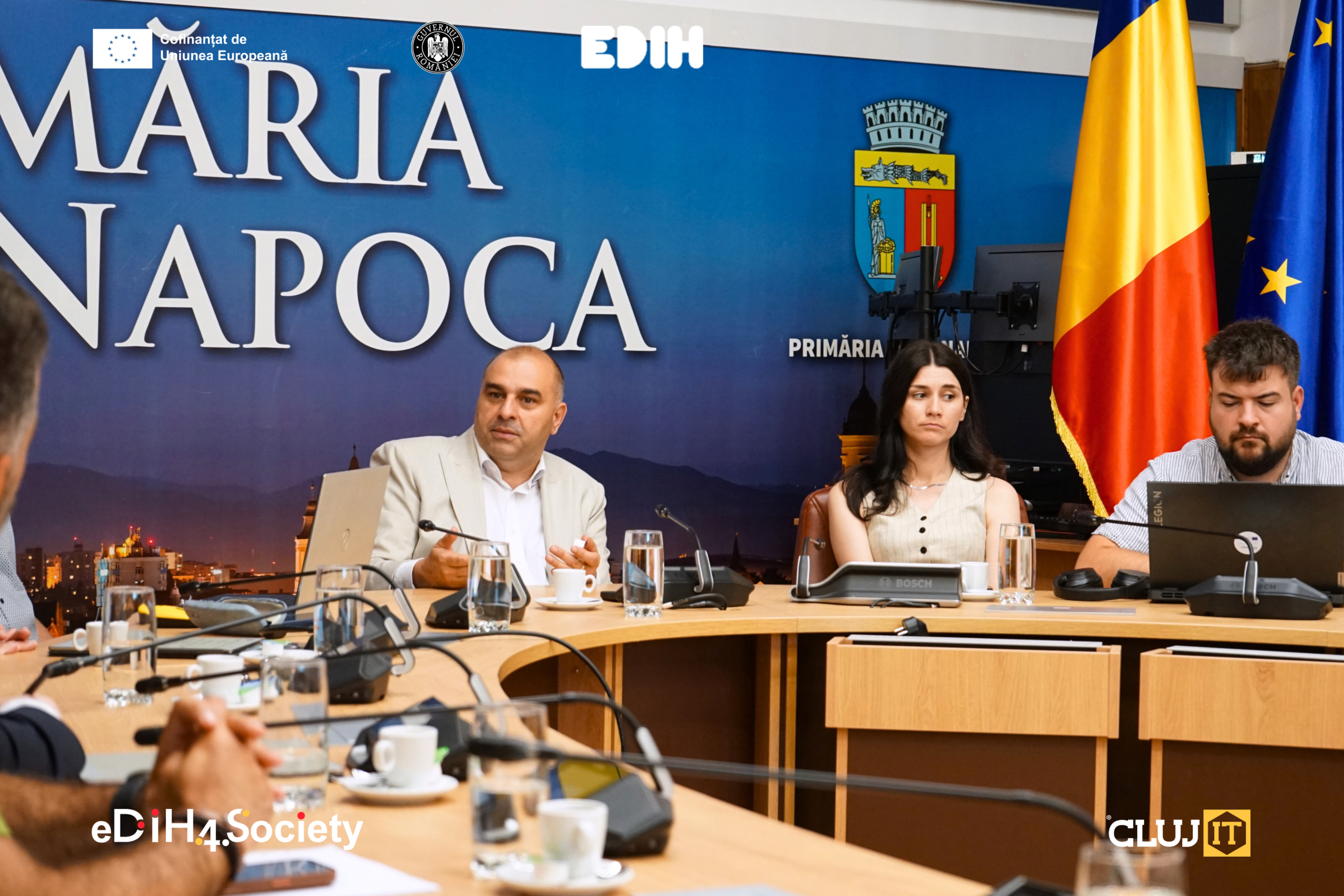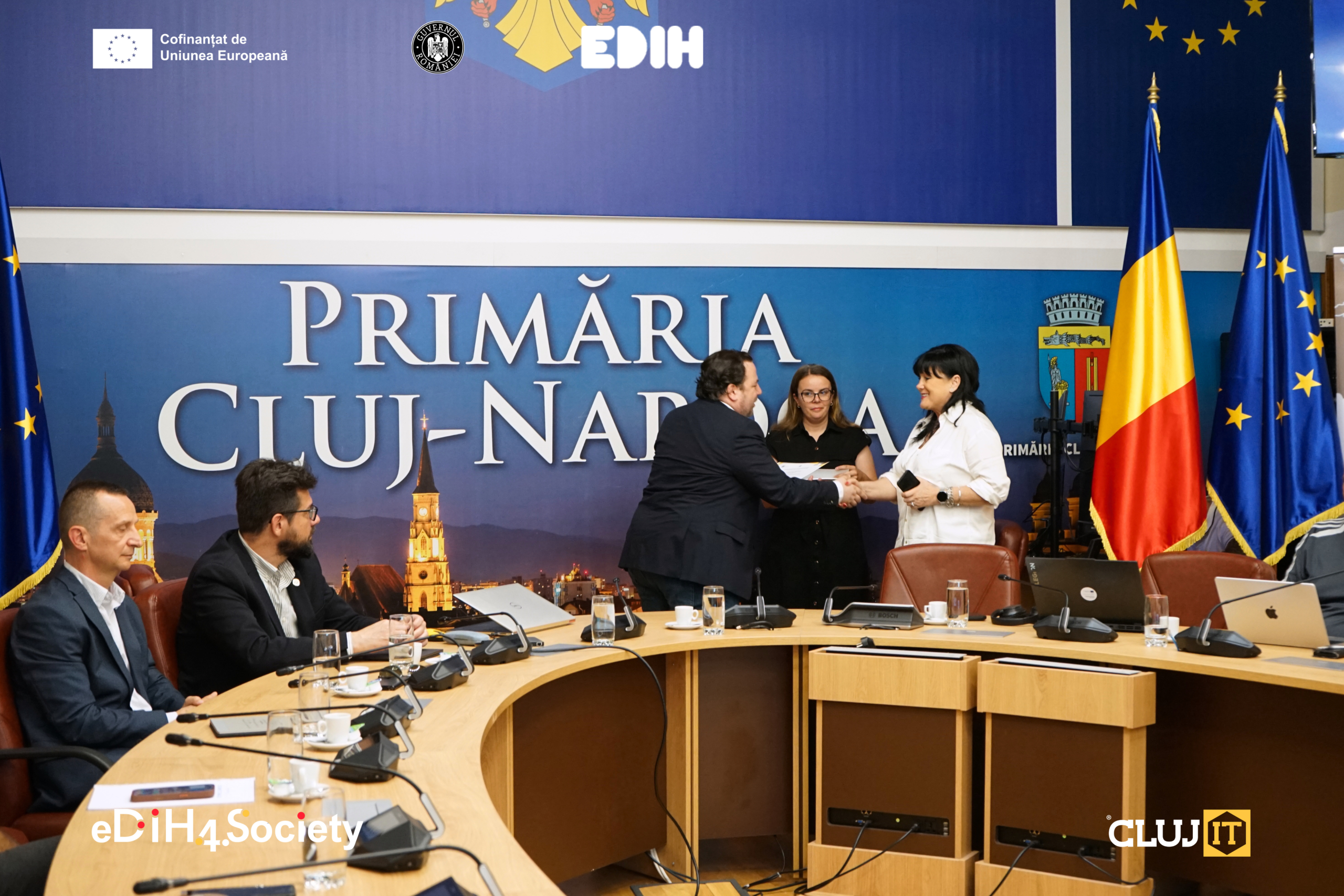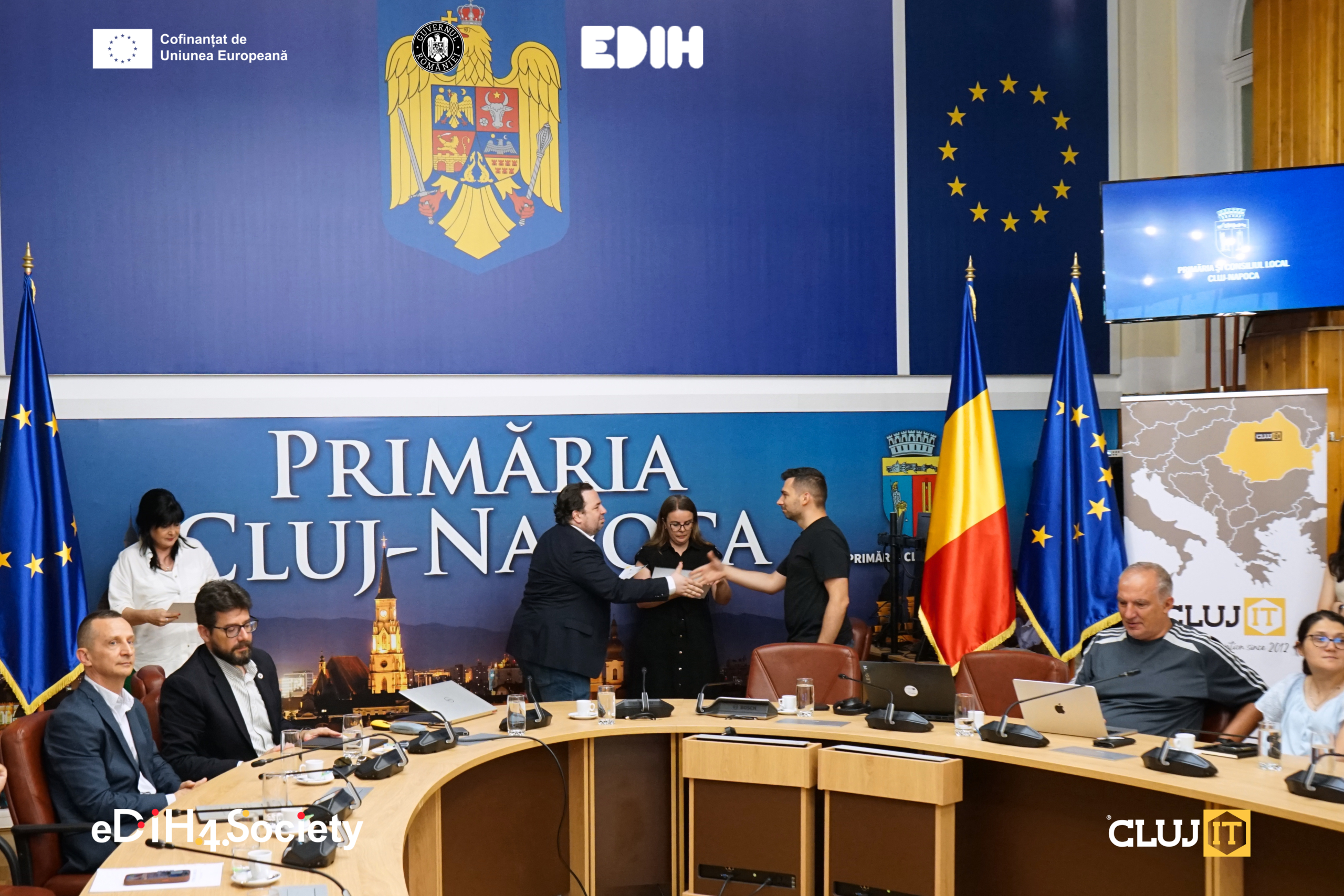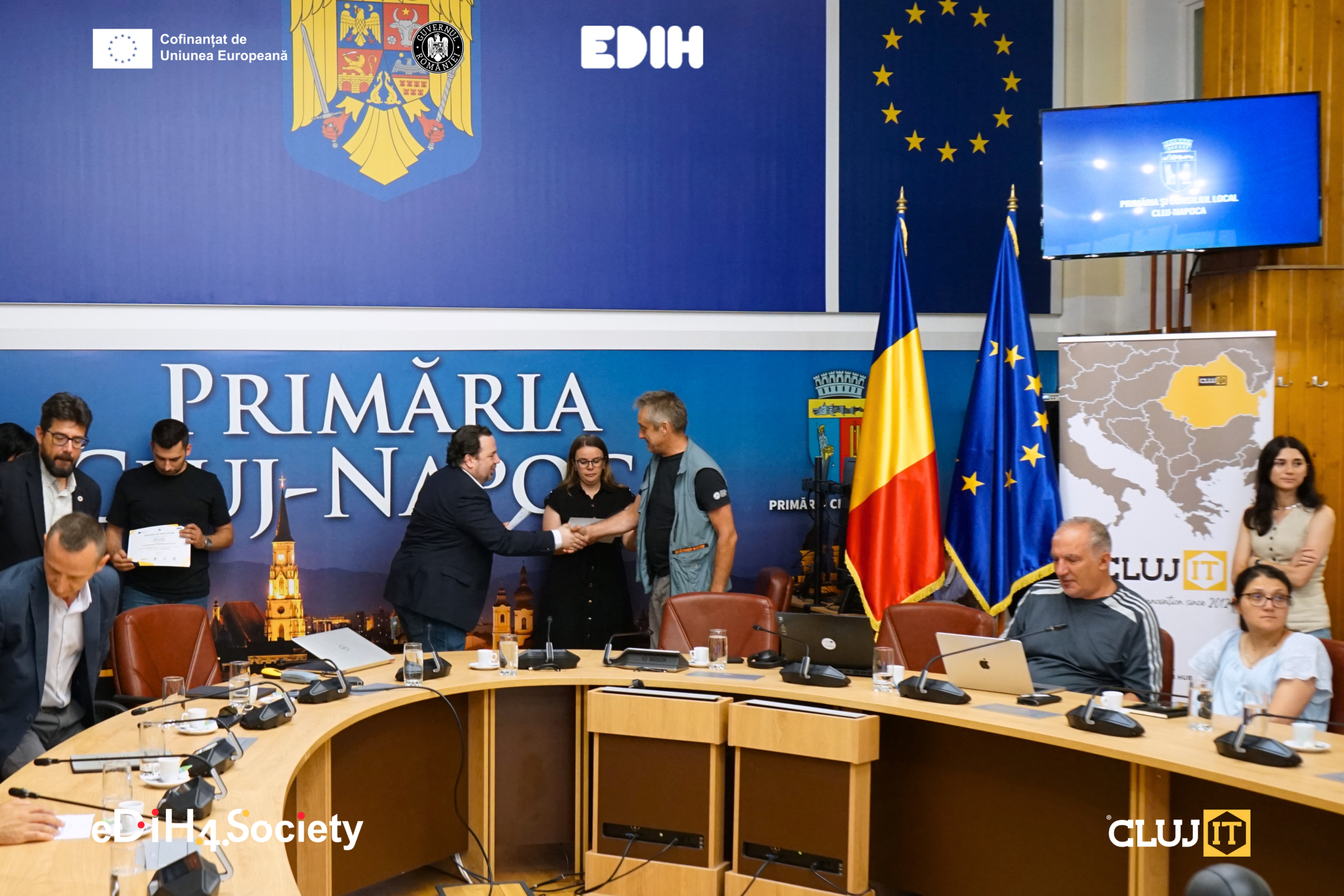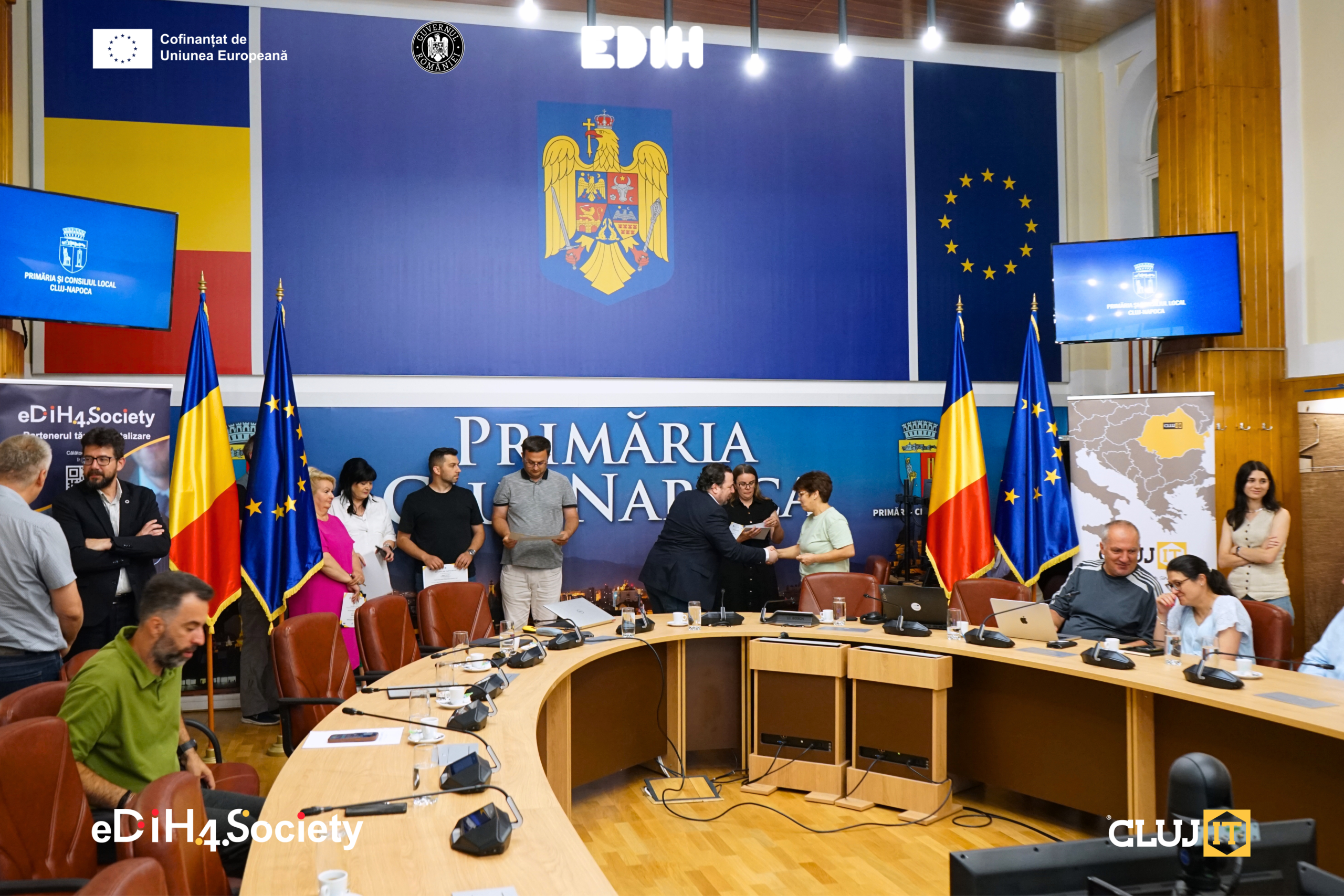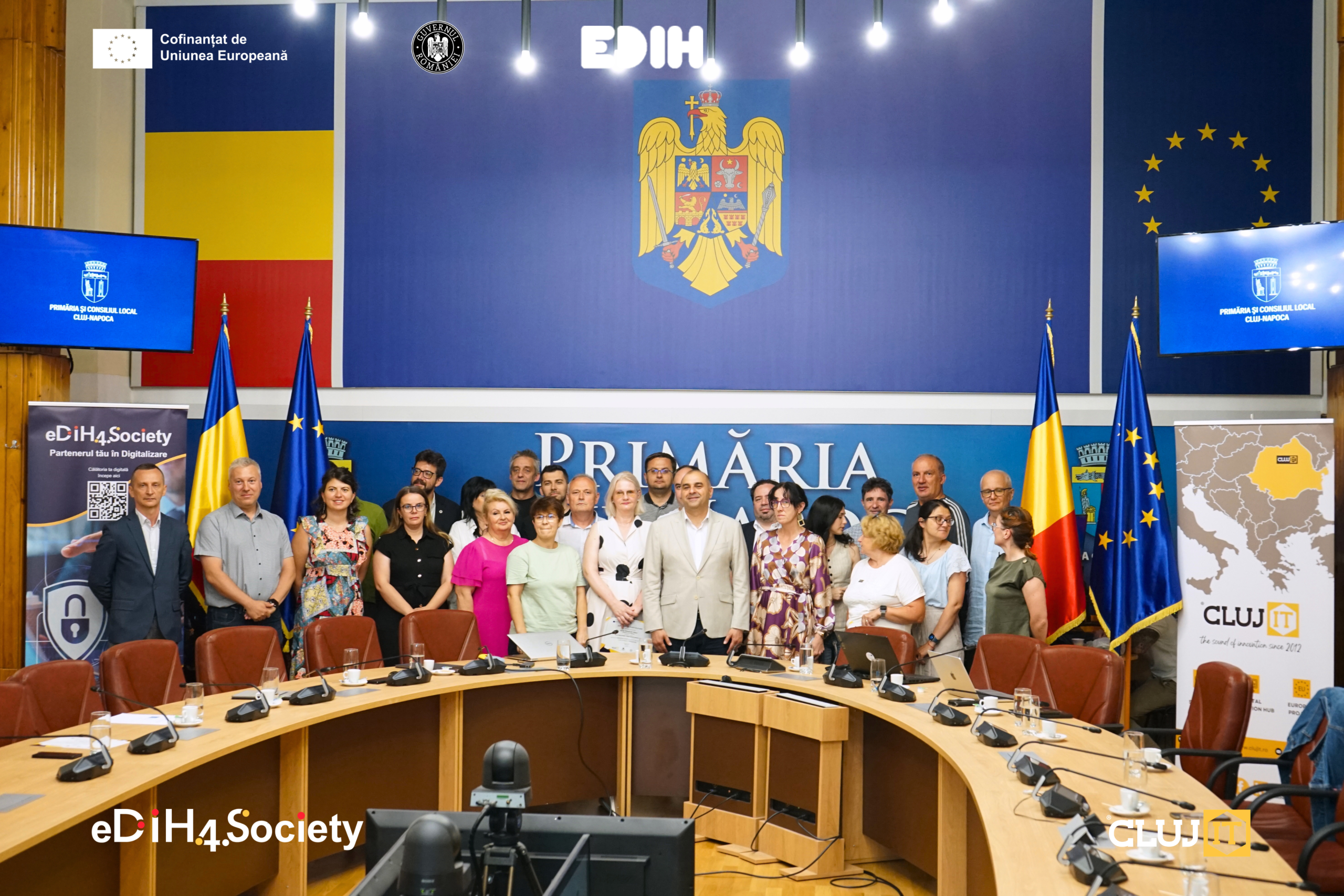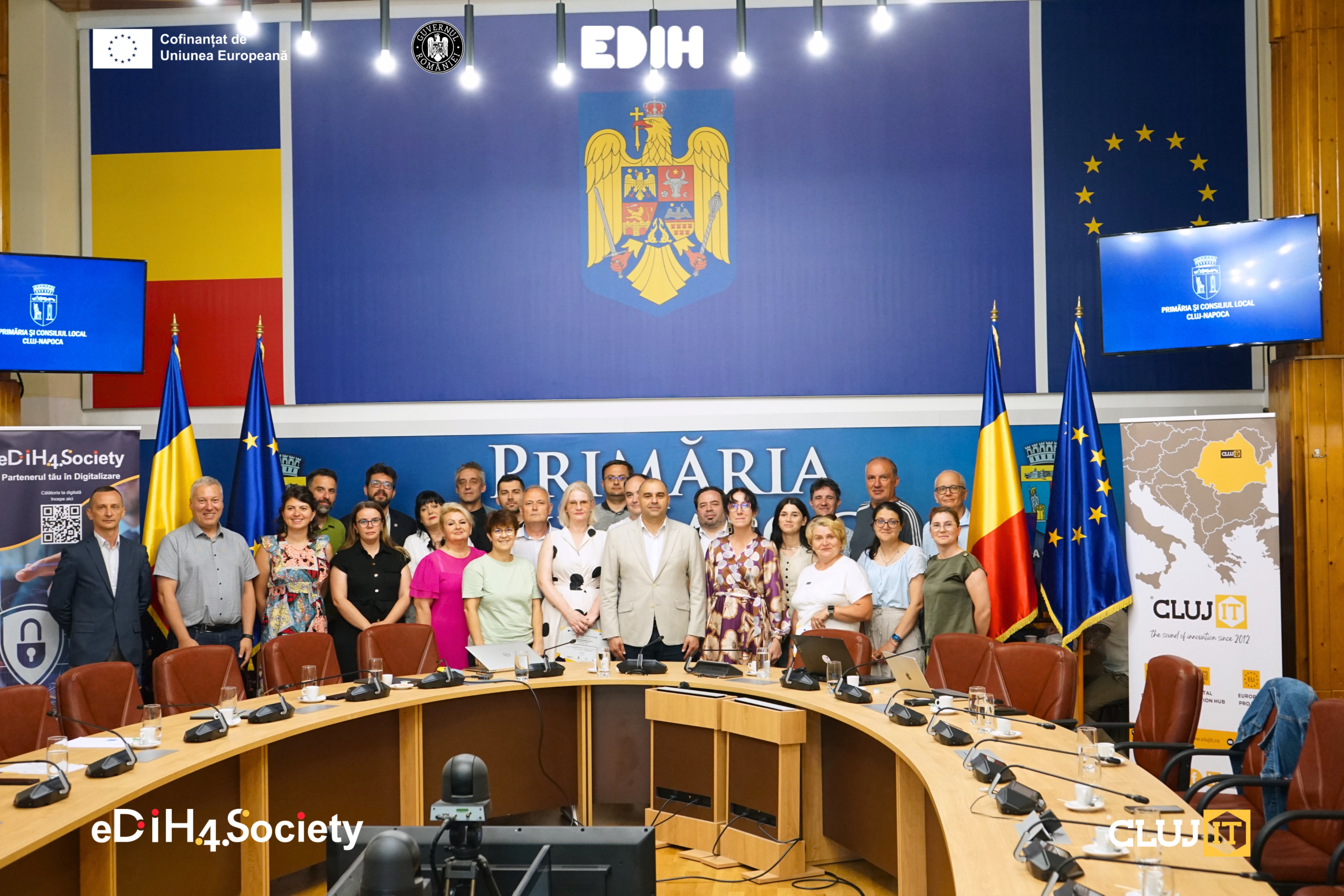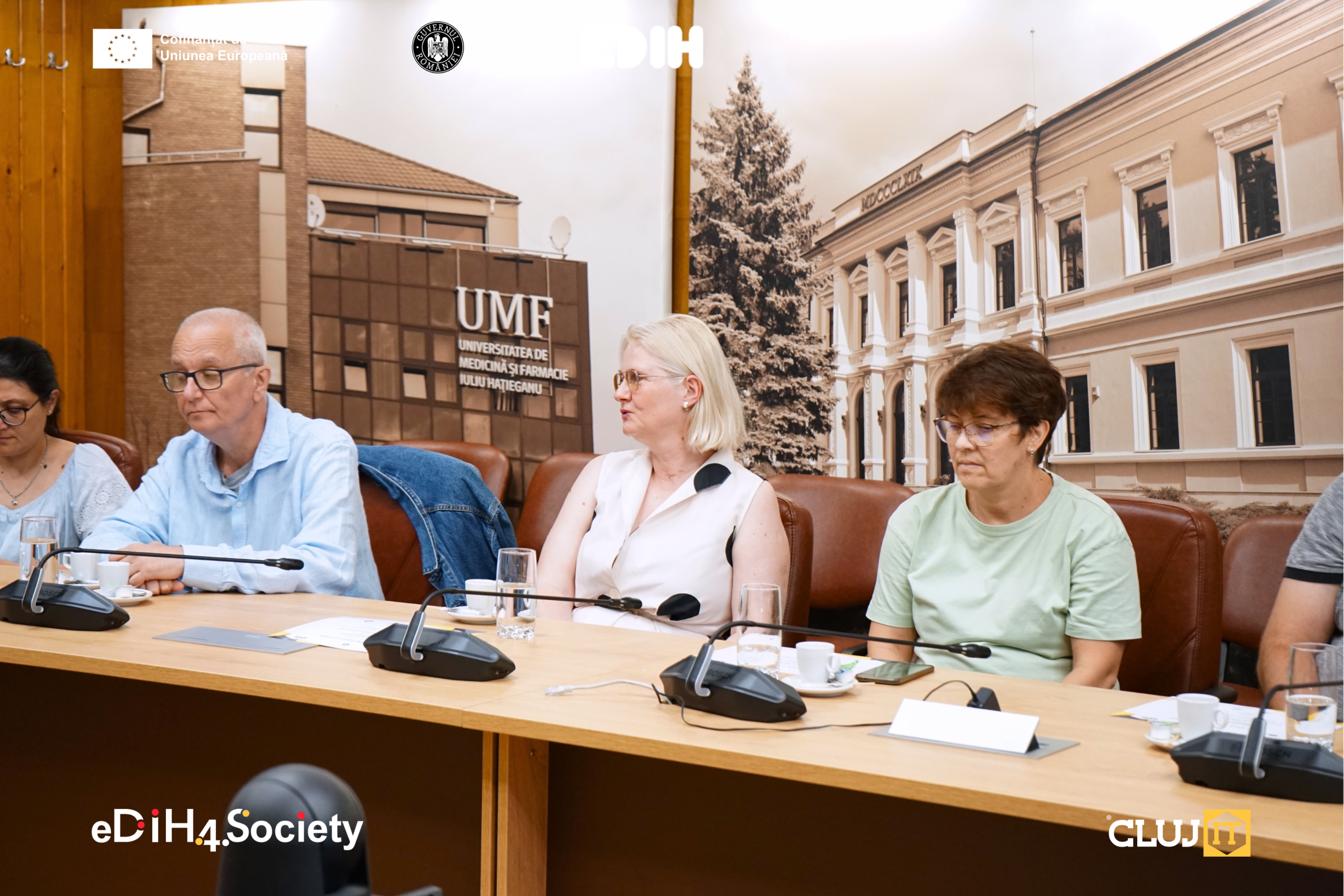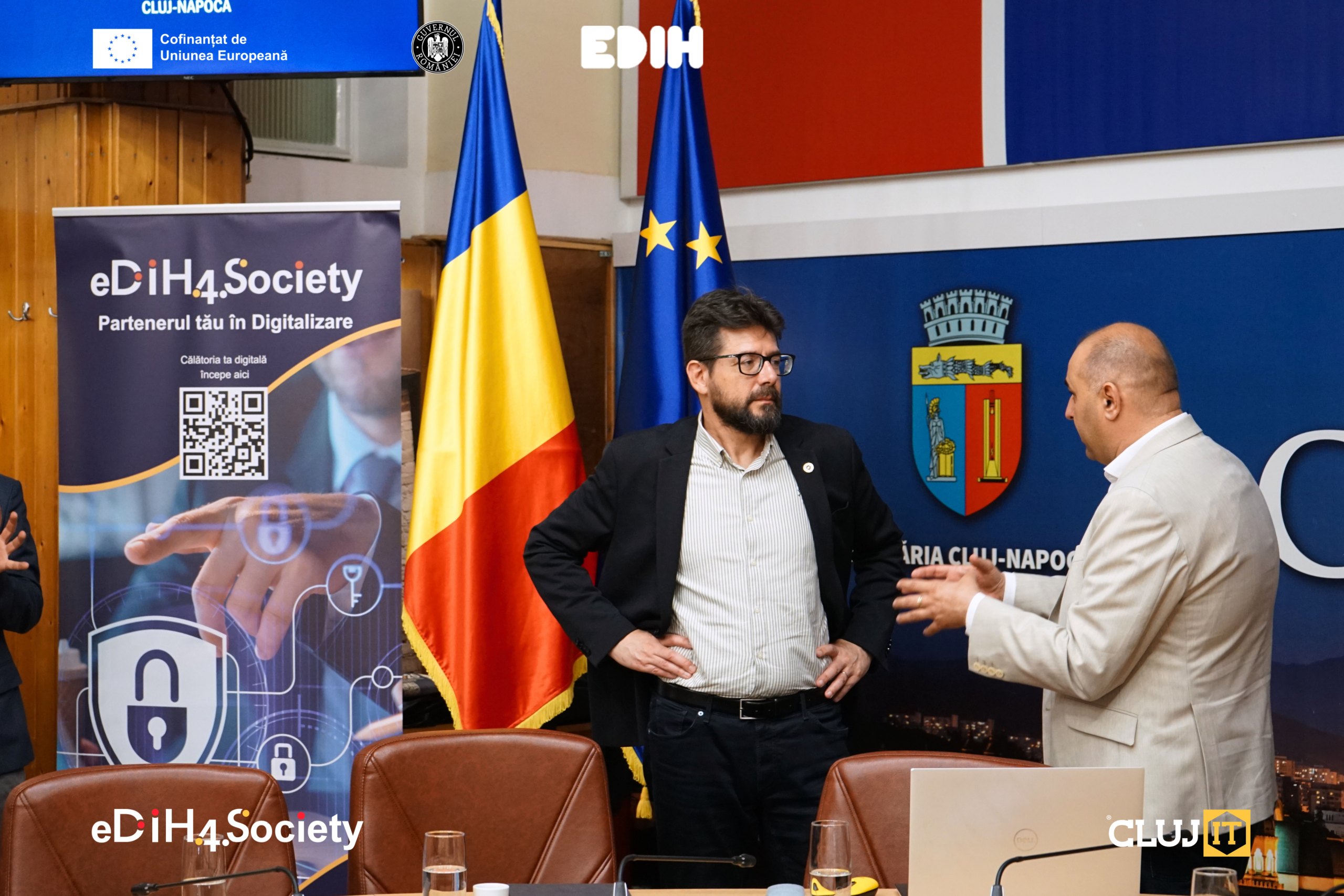


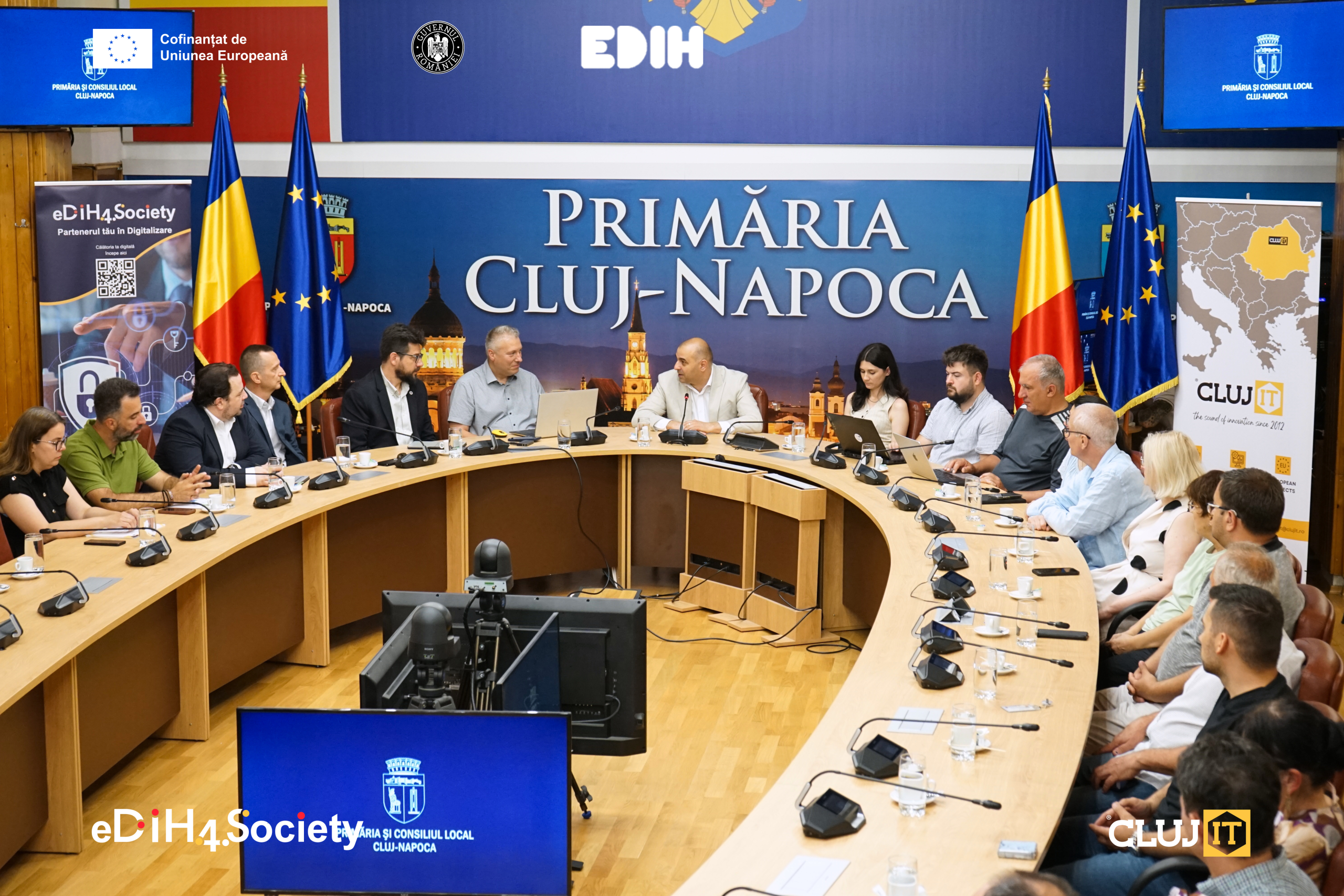
In the context of accelerating digital transformation processes in public administration, DIH4Society and Cluj-Napoca City Hall marked, on 23 June, the completion of the first stage of the collaboration carried out under the digitalisation support programme addressed to public institutions. The event, hosted in the Glass Hall of Cluj-Napoca City Hall, brought together representatives of the local administration, experts from the digital innovation ecosystem and public servants involved in the activities carried out over the last months.
The partnership between DIH4Society and Cluj-Napoca City Hall aimed to strengthen the institution's capacity to respond to the challenges of digital transformation through integrated training, consultancy and assessment services. Within the project, training programmes in cybersecurity, consultancy services for public investments, digital maturity assessment activities and support for managing cyber risks were delivered. At the same time, representatives of the local administration benefited from opportunities to take part in the International Digital Transformation Conference organised by DIH4Society.
The event was opened by Dan Tarcea, Viceprimarul municipiului Cluj-Napoca, who highlighted the importance of digital transformation for modernising public services and underlined the value of the collaboration developed with DIH4Society. In his speech, he reaffirmed the institution's commitment to continuing digitalisation processes and to active participation in the new stage of the programme, which will officially begin on 1 July.
On behalf of DIH4Society, Andrei Kelemen, CEO of Cluj IT Cluster and co-founder of the digital innovation hub, conveyed his appreciation for the involvement of public servants in the activities carried out and for the openness shown towards organisational change processes. He presented the history of the collaboration between Cluj IT and Cluj-Napoca City Hall and reaffirmed the innovation ecosystem's readiness to support public institutions both through consultancy and training services and by facilitating access to scalable and sustainable digital solutions.
The perspectives of the next implementation stage were presented by Edgar Zoltan, Project Manager, who underlined the results obtained in the relationship with beneficiaries and highlighted the strategic priorities of DIH4Society 2.0. The central message of the speech was one of continuity, by reaffirming the role of public institutions as priority partners of the digital innovation hub and by expressing readiness to extend the collaboration into new areas of interest.
In the presentation dedicated to the project results, Ovidiu Codreanu, DIH4Society Service Delivery Coordinator, highlighted Cluj-Napoca City Hall's position above the national and international average in terms of the level of digitalisation. He presented the main directions of collaboration developed within the project, including strengthening cybersecurity skills for over 80 public servants, through participation in specialised training programmes dedicated to both technical and administrative staff.
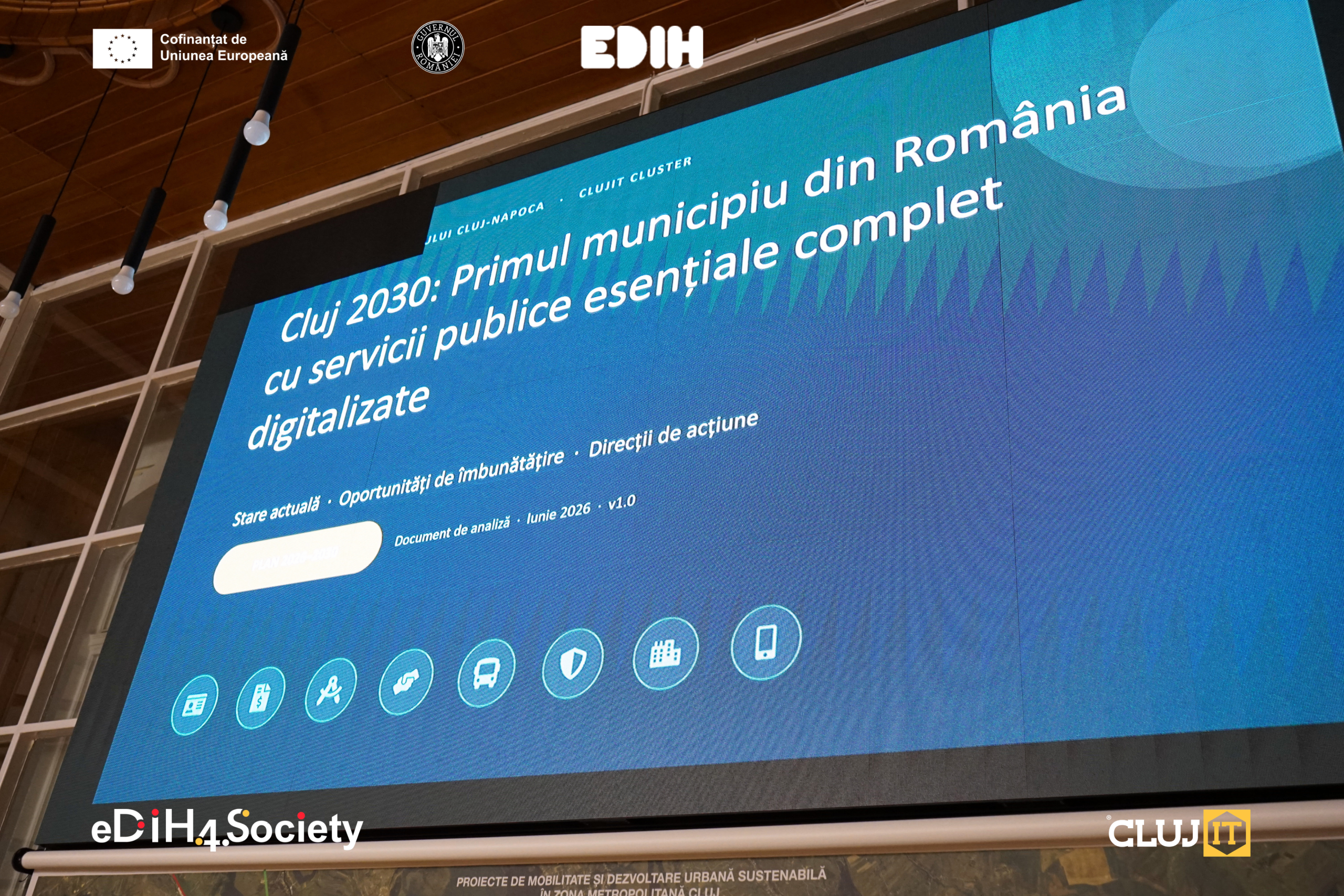
An important moment of the event was the presentation of the case study carried out by Cristian Pavel, expert DIH4Society, which summarised the conclusions of the public investment analysis and consultancy services carried out within the project. The challenges identified in administrative processes were highlighted, as well as concrete recommendations for increasing efficiency and accelerating the digitalisation of public services. The vision proposed following this process is an ambitious one: “Cluj 2030 – the first municipality in Romania with essential public services fully digitalised”.
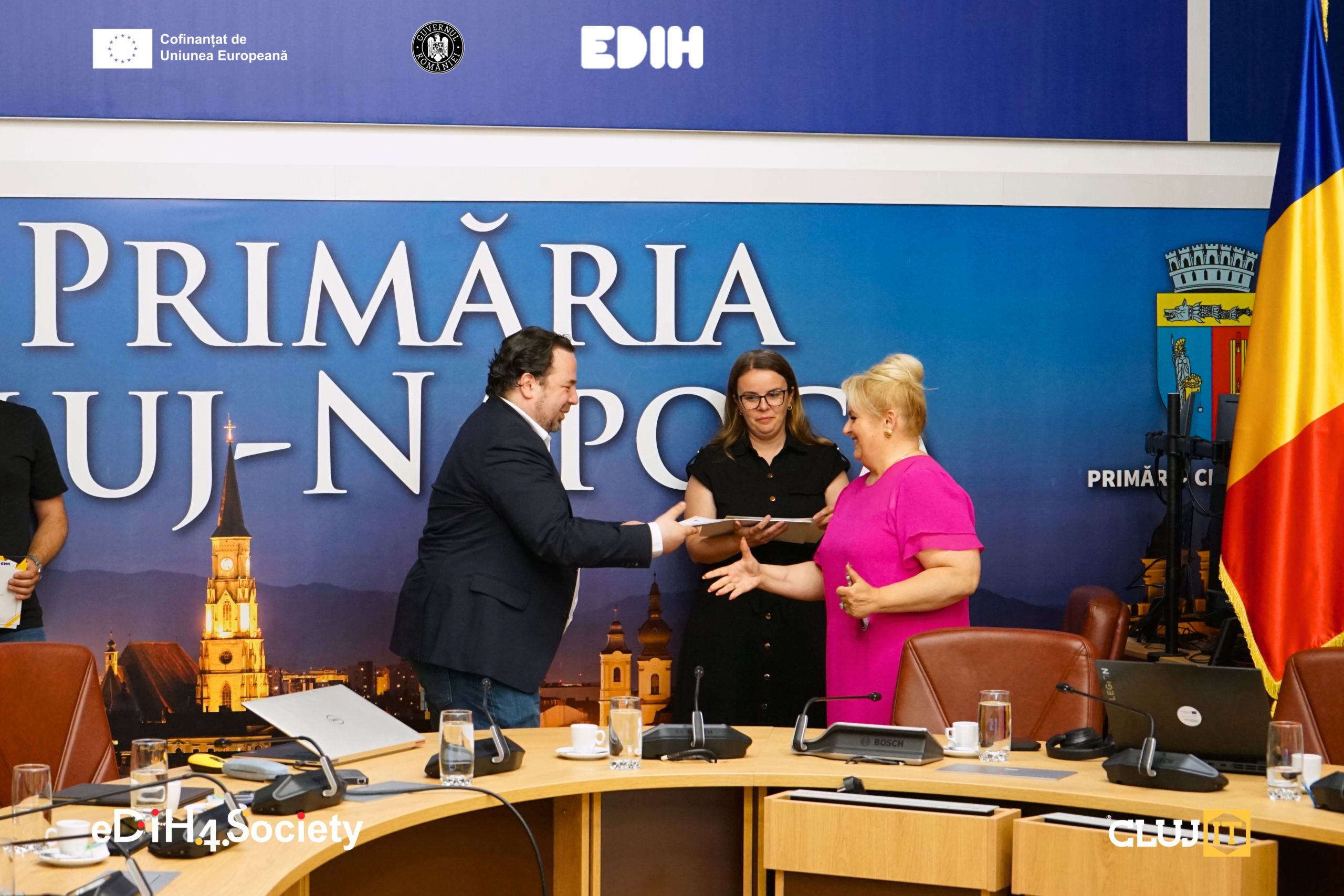
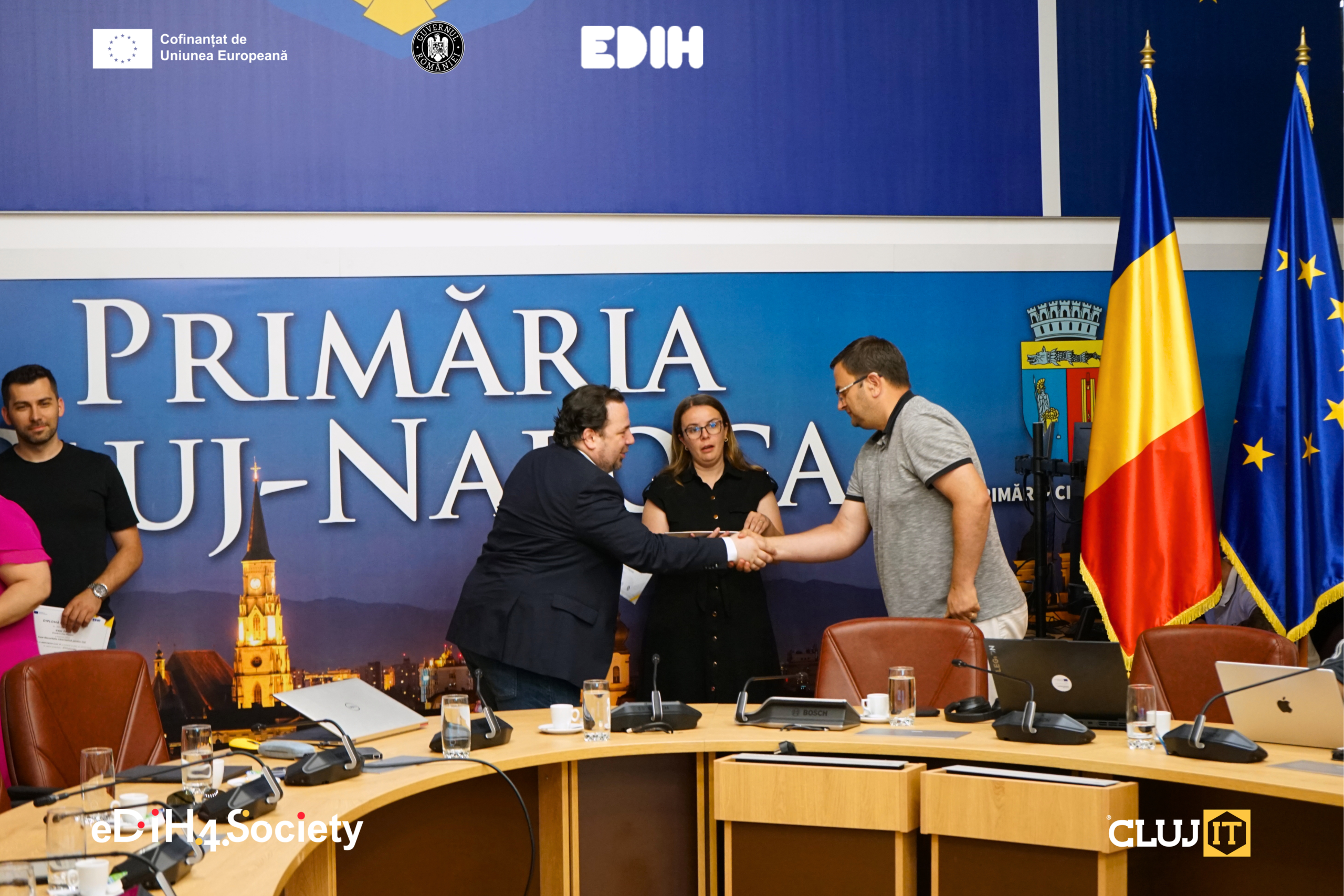
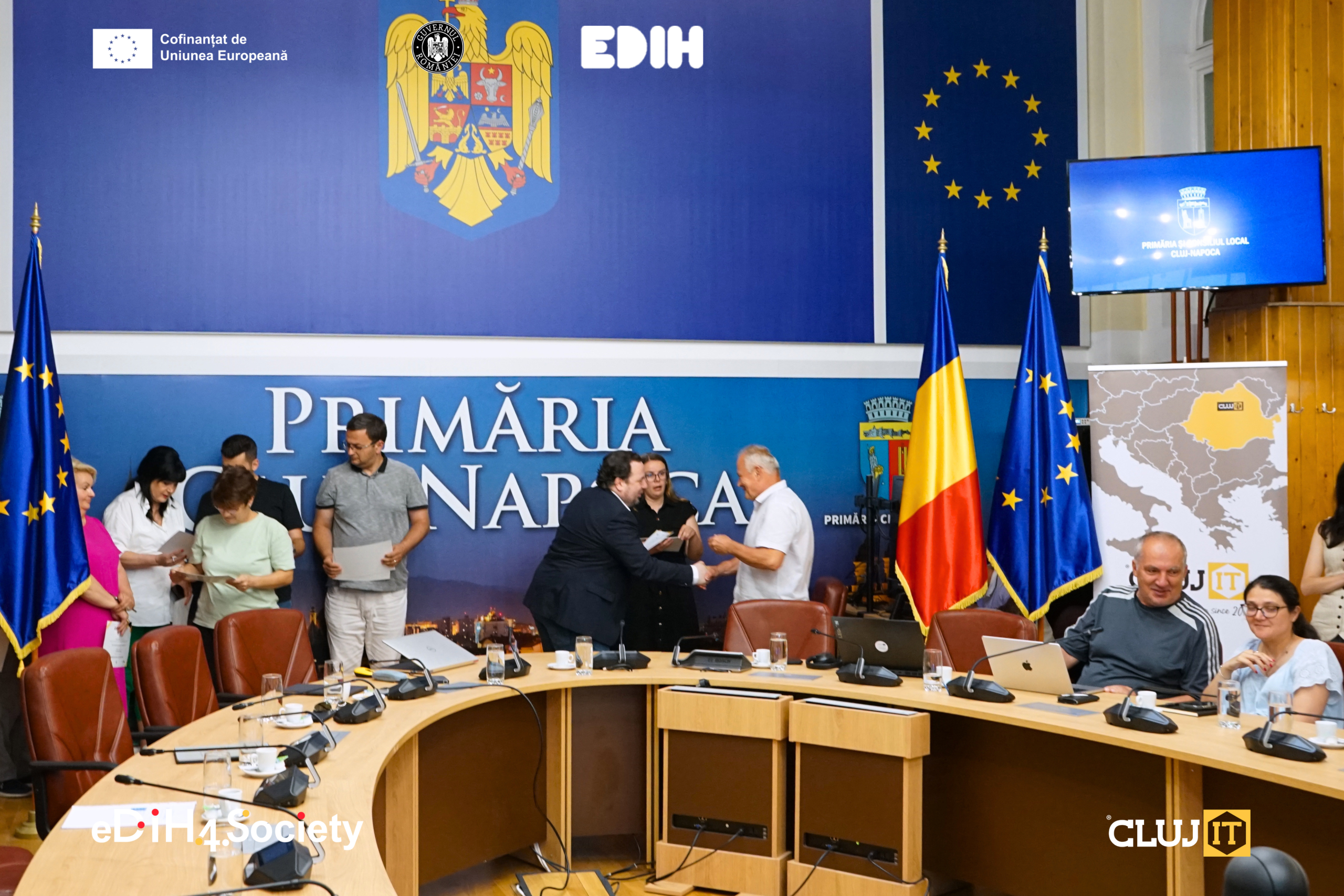
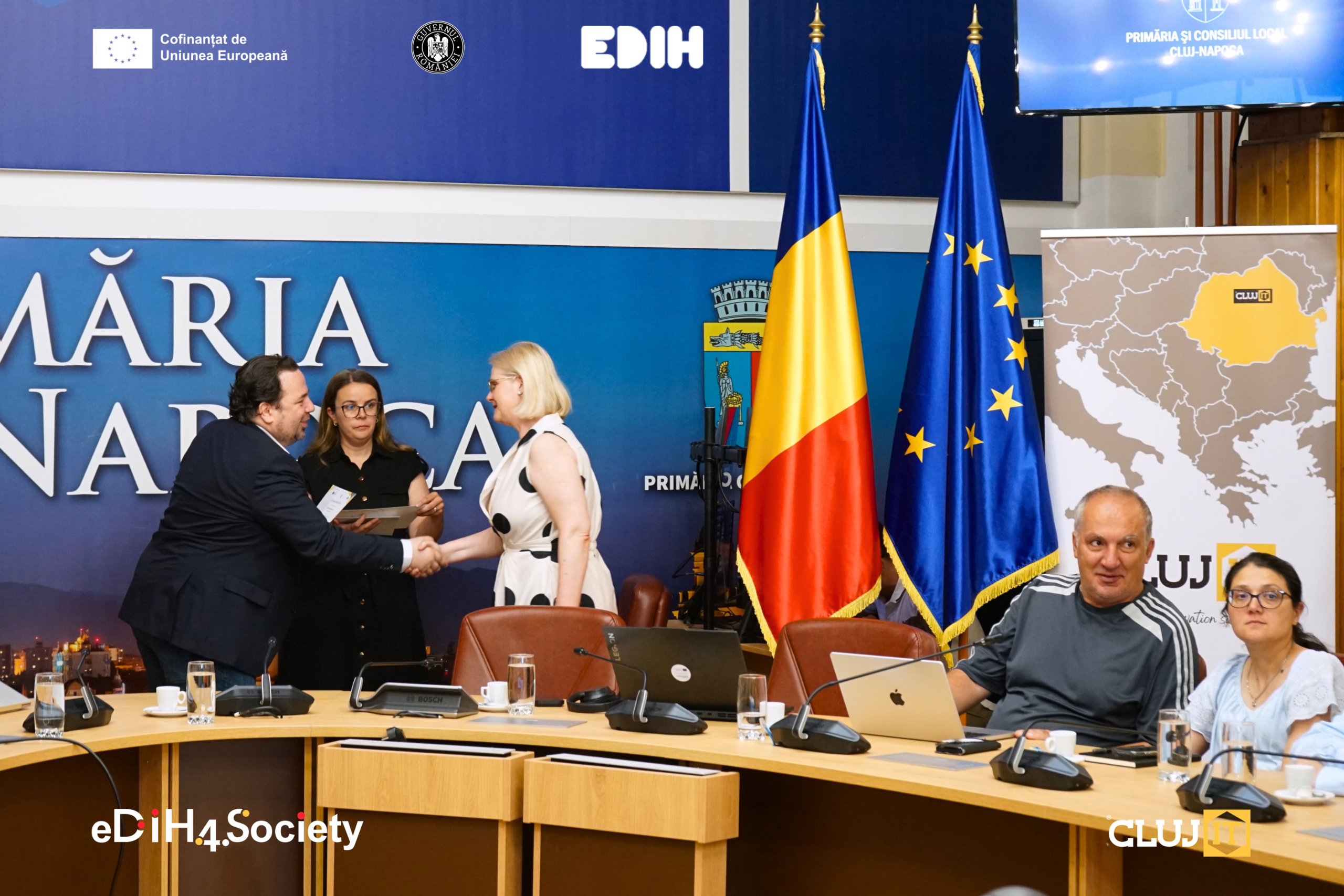
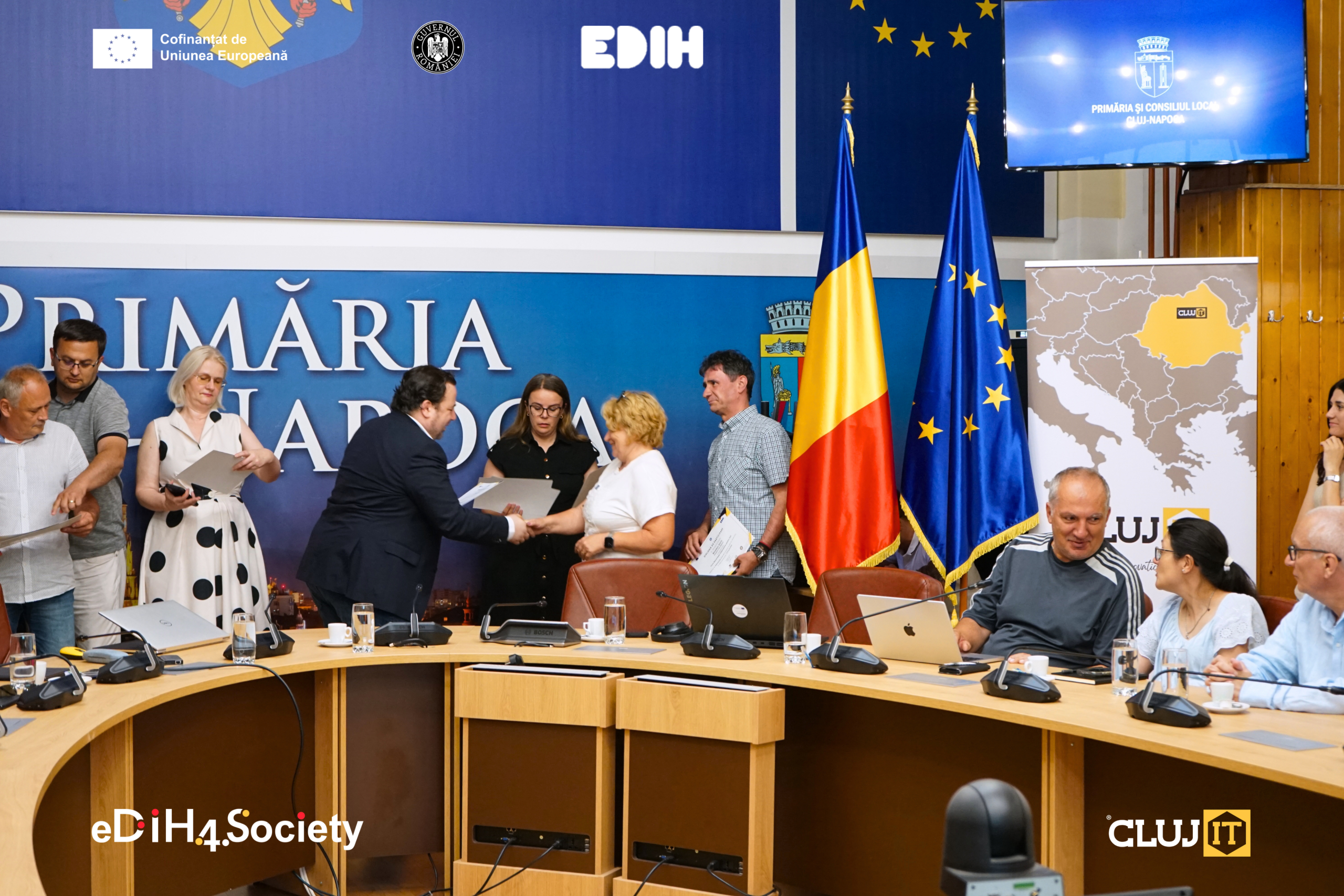
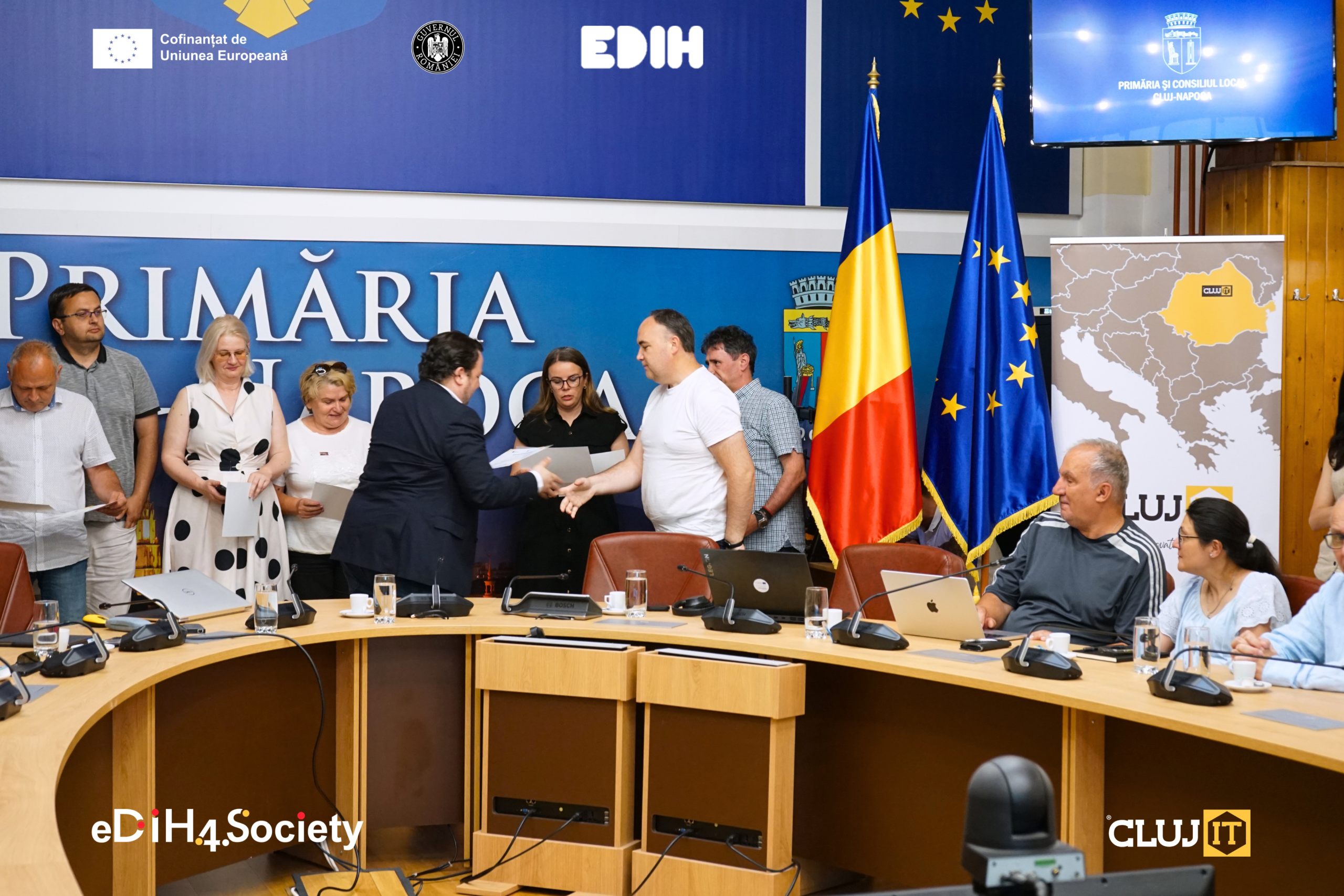
The event also included the ceremony for handing over certificates to participants in the cybersecurity training programmes, thus marking the official end of the first stage of collaboration.
The discussions in the question-and-answer session confirmed the high interest of public servants in continuing digital transformation processes. Participants raised concrete challenges encountered in day-to-day work, from excessively bureaucratic administrative procedures and the need for interoperability between systems, to the opportunities offered by emerging technologies for making public services more efficient.
Both the representatives of Cluj-Napoca City Hall and those of DIH4Society expressed openness to continuing the collaboration in the next implementation stage of the digital innovation hub. Particular interest was shown in developing cybersecurity skills and in the responsible integration of artificial intelligence-based solutions into the work of public administration. These directions are seen as essential elements for strengthening the capacity of public institutions to offer modern, efficient and secure services to citizens.
Through the results obtained and the perspectives opened for the coming period, the collaboration between DIH4Society and Cluj-Napoca City Hall is a relevant example of a partnership between public administration and the digital innovation ecosystem, with the potential to generate replicable models at national level for modernising public services.